
“Are soft coolers worth it?” is one of the most searched cooler questions of the year — and one of the hardest to answer with a simple yes or no. The truth is that soft coolers are worth it for some trips and a poor investment for others.
How long do they really hold ice? Where do they beat hard coolers? And when should you spend your money on a rotomolded box instead? This guide answers all three with real numbers and a clear decision checklist — no brand hype.
Whether you’re a weekend hiker, a fishing guide, or a buyer sourcing coolers for a retail line, the same framework applies: match the cooler to the mission, and the right choice becomes obvious.
Key Takeaways
- Soft coolers shine on day trips: expect 12–36 hours of ice retention from a good one, and up to 48 hours from premium models.
- Portability, collapsible storage, and a wide price range make soft coolers a smart buy for hikers, commuters, and weekend hosts.
- Multi-day trips, rough terrain, and big loads are where soft coolers lose value — a rotomolded hard cooler keeps ice for 5–7 days.
When a Soft Cooler Is Worth It
Soft coolers win whenever your priorities are portability, space, and convenience. Here’s what makes them genuinely worth the money.
Portability you can feel
Weight is the first difference you notice. A 20-quart hard cooler can weigh 15–20 pounds empty. A soft cooler of similar size often weighs just a couple of pounds.
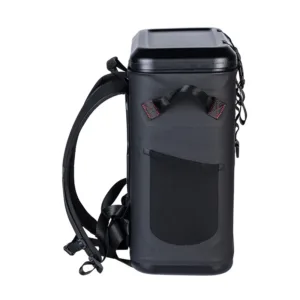
Add padded shoulder straps or a backpack design, and you can carry lunch, drinks, and ice for miles without a second pair of hands. That’s why backpack coolers and insulated lunch bags have become everyday gear for hikers, cyclists, commuters, and parents.
Storage that doesn’t fight back
Soft coolers flex and collapse to fit tight spaces. When empty, they tuck into a closet, under a seat, or behind the back seat of your car.
A hard cooler takes up the same space whether it’s full or empty — a real problem for apartment dwellers and small-car owners.
That flexibility also makes soft coolers a smarter second cooler. Keep one in the car for groceries and spontaneous stops, and save the big hard cooler for trips that actually need it.
Cold for a full day out
A well-made soft cooler keeps food and drinks cold for 12 to 36 hours. That covers a day at the lake, a beach picnic, a fishing trip, or a tailgate.
Premium soft coolers of similar grade have held an internal temperature below 37°F after 48 hours in independent testing, and the best soft-sided models maintain ice for 24–48 hours in normal use.
In other words, a quality soft cooler is a solid single-day performer — not just a “few hours” bag.
Ambient temperature, sun exposure, and how often you open it move these numbers by hours, so plan generously on hot days.
Versatility hard coolers can’t match
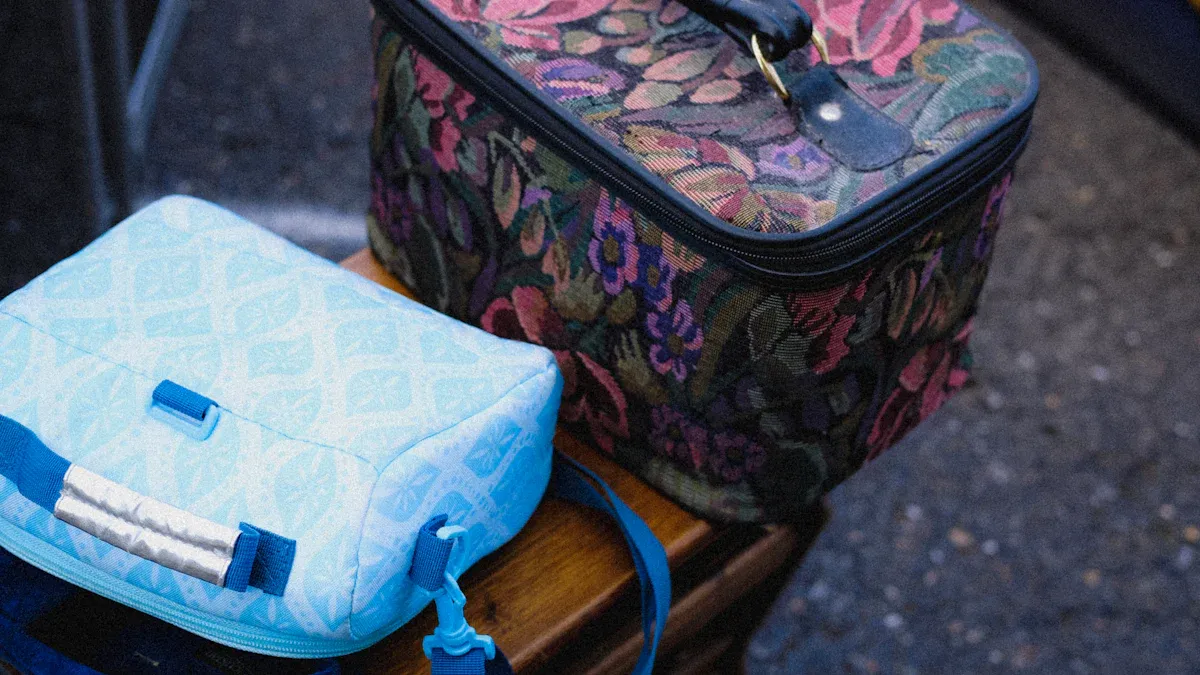
Soft coolers come in formats that don’t exist in hard plastic: lunch bags, backpack coolers, crossbody slings, and totes.
They’re gentler on car interiors, easier to wipe down, and won’t crack or chip when dropped.
They’re also a natural canvas for branding. That’s why sports teams, breweries, and outdoor brands choose custom soft cooler bags for giveaways, retail, and trade shows.
How to get more cold from any soft cooler
Ice retention depends on how you pack, not just what you buy. Keep the cooler out of direct sun, open it as little as possible, and pack it the night before.
Rotating in frozen water bottles instead of loose ice keeps things colder longer and leaves you with cold drinking water at the end of the day.
Tip: Pre-chill your soft cooler the night before and use a 2:1 ice-to-contents ratio for maximum ice retention.
Every budget has an option
Soft coolers span a huge price range, from $20 lunch bags to $300 premium totes. Entry-level models are a genuine bargain for light, occasional use.
Mid-range models usually offer the best value per dollar for most day-trippers: decent insulation, reliable zippers, and comfortable straps without the premium markup. The value trap only appears at the top end, where soft-cooler prices collide with hard-cooler prices.
Set your budget first, then compare within your use case — not across the entire category.
When a Soft Cooler Isn’t Worth It
Now the honest side. There are five situations where a soft cooler is the wrong tool — and a hard cooler earns its higher price.
Multi-day trips
Soft coolers typically lose their ice within one to two days. On a weekend camping trip, that means hunting for ice or eating warm food by Sunday morning.
A premium rotomolded hard cooler keeps ice for five to seven days. That’s the difference between planning a menu and crossing your fingers.
If your trip runs longer than two days, treat a soft cooler as a secondary cooler — drinks and snacks for the first day — and put food in a hard cooler.
Rough terrain and rugged jobs
Hard coolers double as seats, tables, and step stools. Soft coolers can’t carry that load.
On job sites, boats, and campsites, a rotomolded box also survives drops that would puncture fabric. Premium rotomolded coolers are rated to survive serious impacts — like a 15-meter fall — and many carry FDA bear-resistant certifications. They’re built for serious abuse, not just Sunday picnics.
Premium prices, limited ice
Top-tier soft coolers can cost $250–$350 — the same as a heavy-duty hard cooler — while retaining far less ice.
Once you’re paying premium prices, the value math changes. For the same money, a rotomolded hard cooler delivers multi-day performance, a seat you can trust, and years of service.
Big groups and big loads
Soft coolers are mostly small-to-medium, roughly 12–30 quarts.
If you’re feeding a family of four for a week or provisioning a long fishing trip, a 60–110 quart hard cooler — ideally one with wheels — is the only practical answer.
Hot climates and frequent opening
Every time the lid opens, cold air escapes and warm air rushes in. Soft coolers recover more slowly than rotomolded hard coolers, and in direct summer sun the difference shows by the end of the day.
Note: Because soft coolers have thinner walls than rotomolded hard coolers, they recover more slowly when opened in direct summer sun.
The physics of thin walls
The trade-off is unavoidable. Soft coolers stay light and packable because their walls are thin — and thin walls transfer heat faster than the thick, seamless walls of a rotomolded box.
That’s why the same cooler that sails through a beach day struggles on day three of a campout. Choose the tool based on how long the cold actually has to survive.
Soft Cooler vs. Hard Cooler at a Glance
| Factor | Soft Cooler | Hard Cooler (rotomolded) |
| Portability | Lightweight, backpack/shoulder options | Heavy; best carried car-to-site |
| Ice retention | 12–48 hours | 5–7 days |
| Durability | Fabric shell, absorbs impact | Impact-resistant, bear-resistant options |
| Storage | Collapsible, small footprint | Fixed footprint, always bulky |
| Seat/table utility | No | Yes |
| Capacity range | ~12–30 quarts typical | 20–110+ quarts |
| Best for | Day trips, hiking, beach, lunch | Multi-day camping, fishing, job sites |
How to Choose the Right Cooler for Your Next Trip
So, are soft coolers worth it? Yes — for the right use. For most households, the honest answer is that both types deserve a place in the garage. Answer these three questions first:
- How long do you need cold? Under 24 hours → soft cooler. Two days or more → hard cooler.
- How far will you carry it? Any real walking, hiking, or public transit → soft cooler. Car-to-campsite only → hard cooler.
- How rough is the environment? Boat decks, job sites, or bear country → hard cooler. Picnics, parks, stadiums, and offices → soft cooler.
What to check before buying a soft cooler
If your checklist points to soft, inspect the details that separate a keeper from a disappointment: insulation, seal, liner, straps, and materials.
A high-quality soft cooler should use thick polyurethane foam insulation, not a thin foil lining. Look for a zipper or closure that seals tightly, a leakproof liner that’s easy to wipe clean, and padded straps that stay comfortable under a full load.
These are the exact features professional manufacturers build into their high-quality soft coolers — and the ones worth paying for.
What to check before buying a hard cooler
If your checklist points to hard, look for rotomolded construction with thick seamless walls, a snug gasket, heavy-duty latches, through-bolted handles, and a drain plug.
Tip: Close the lid on a piece of paper and pull. Strong resistance means the gasket is doing its job — cold stays in, heat stays out.
Sizes from 20 to 110 quarts cover everything from solo day trips to base-camp duty. For the biggest loads, rotomolded hard coolers with wheels make a 110-quart workhorse surprisingly easy to move — even over sand and rocks.
The verdict: are soft coolers worth it?
For day hikes, beach days, tailgates, work lunches, and any moment where your hands are already full — absolutely.
For week-long expeditions and heavy-duty use, a rotomolded hard cooler is the smarter buy. Match the cooler to the mission, and you’ll never regret the purchase.
KUER Cooler Box & Soft Cooler Solutions
If you decide a soft cooler or a rotomolded hard cooler fits your needs, KUER Group offers dependable options for both. As a manufacturer with over a decade of OEM/ODM experience, KUER controls everything from raw materials to final assembly — so the quality standards above are built in, not added on.
Soft coolers for day trips
KUER’s soft cooler lunch bags use thick polyurethane foam insulation to keep food and drinks cold for 8+ hours — a full workday, school day, or trailhead lunch. Durable outer materials handle daily travel, and a sealing gasket keeps cold air in. Browse the soft cooler lunch bag lineup for your next outing.
For brands, custom insulated cooler bags maintain temperatures between 37.6°F and 45.1°F for up to 14.5 hours — dependable performance for giveaways, retail, and trade shows.
Rotomolded hard coolers for multi-day trips
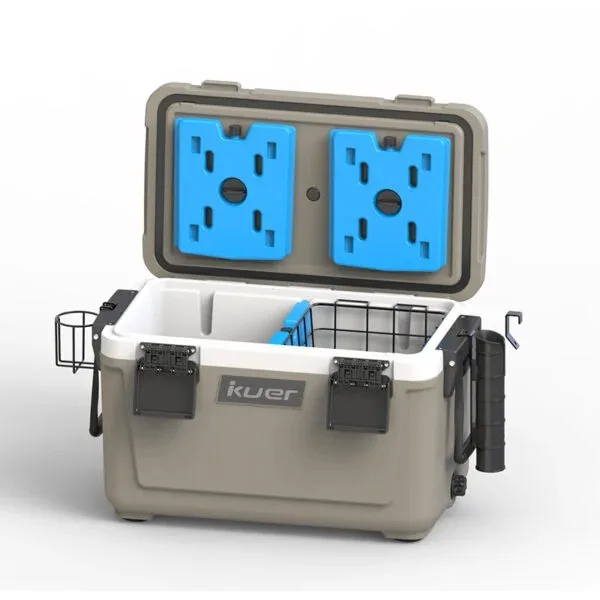
KUER’s rotomolded cooler boxes use seamless walls and thick PU foam insulation to keep ice for 5–7 days. Food-grade LLDPE shells, FDA bear-resistant certifications, and impact-rated construction handle rough terrain with ease. See the rotomould cooler box range.
Sizes span 20 to 110 quarts, from a personal camp cooler to wheeled 110-quart workhorses that stay easy to move even over sand and rocks.
Customization and wholesale
KUER offers customization and wholesale services to meet your various needs — colors, logos, materials, capacities, mold designs, and packaging, from a single sample to full container orders.
With five factories, in-house mold making, and raw material production, plus certifications including ISO 9001, CE, SGS, BSCI, and GRS, KUER is a reliable partner for outdoor brands, retailers, and distributors.
Ready to discuss your project? Send an inquiry to the KUER team via the contact page — from custom colors to complete container orders, they’ve got you covered.
FAQ
Can a soft cooler replace a hard cooler?
Not for multi-day trips or heavy loads. However, as a primary cooler for day trips, it absolutely can.
How long do soft coolers keep ice?
Most quality soft coolers keep ice for 12–36 hours. Premium models can stretch to 48 hours with pre-chilled contents and a 2:1 ice-to-contents ratio.
Are premium soft coolers worth the money?
Only if the premium buys real insulation and a leakproof design. If it doesn’t, a well-made mid-range model delivers nearly the same performance for less.

 Request a quote
