

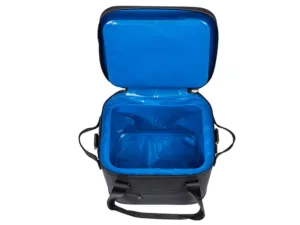
A rotomolded lunch box is a compact hard cooler made through rotational molding. The process creates a durable, one-piece plastic body. Combined with insulation and a close-fitting lid seal, that body protects packed meals and slows heat from reaching food and drinks during work, travel, and outdoor activities.
Unlike a refrigerator, the box does not generate cold. Pack it with chilled food and a suitable cold source. It preserves that environment while providing more physical protection than a flexible lunch bag.
What Is a Rotomolded Lunch Box and How Is It Made?
A Simple Definition
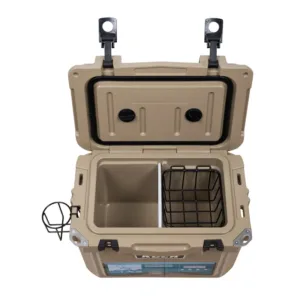
“Rotomolded” is short for “rotationally molded.” In practical terms, a rotomolded lunch box is a small hard-sided cooler rather than a basic food container. A standard plastic lunch container mainly organizes food. A soft-sided bag adds lightweight insulation. A rotomolded model combines insulation with a rigid shell that helps shield containers, cans, and ice packs from crushing and impact.
The product uses passive cooling. Performance depends on the foam, lid, gasket, hardware, size, and packing method. The manufacturing label alone does not guarantee a specific number of hours or days of cold retention.
The Rotational Molding Process
The Association of Rotational Molders describes rotomolding as a process in which material is placed in a heated hollow mold. The mold rotates during heating and cooling so the softened material spreads across the inner walls. For a cooler body, manufacturers normally start with a measured charge of polymer, close the mold, and rotate it on two axes while it is heated.
The melting material coats the mold instead of being injected under high pressure. After cooling, the solid part is removed and finished. The method can form a hollow, seamless body with molded-in details and fewer assembled shell pieces.
Key Parts and Materials
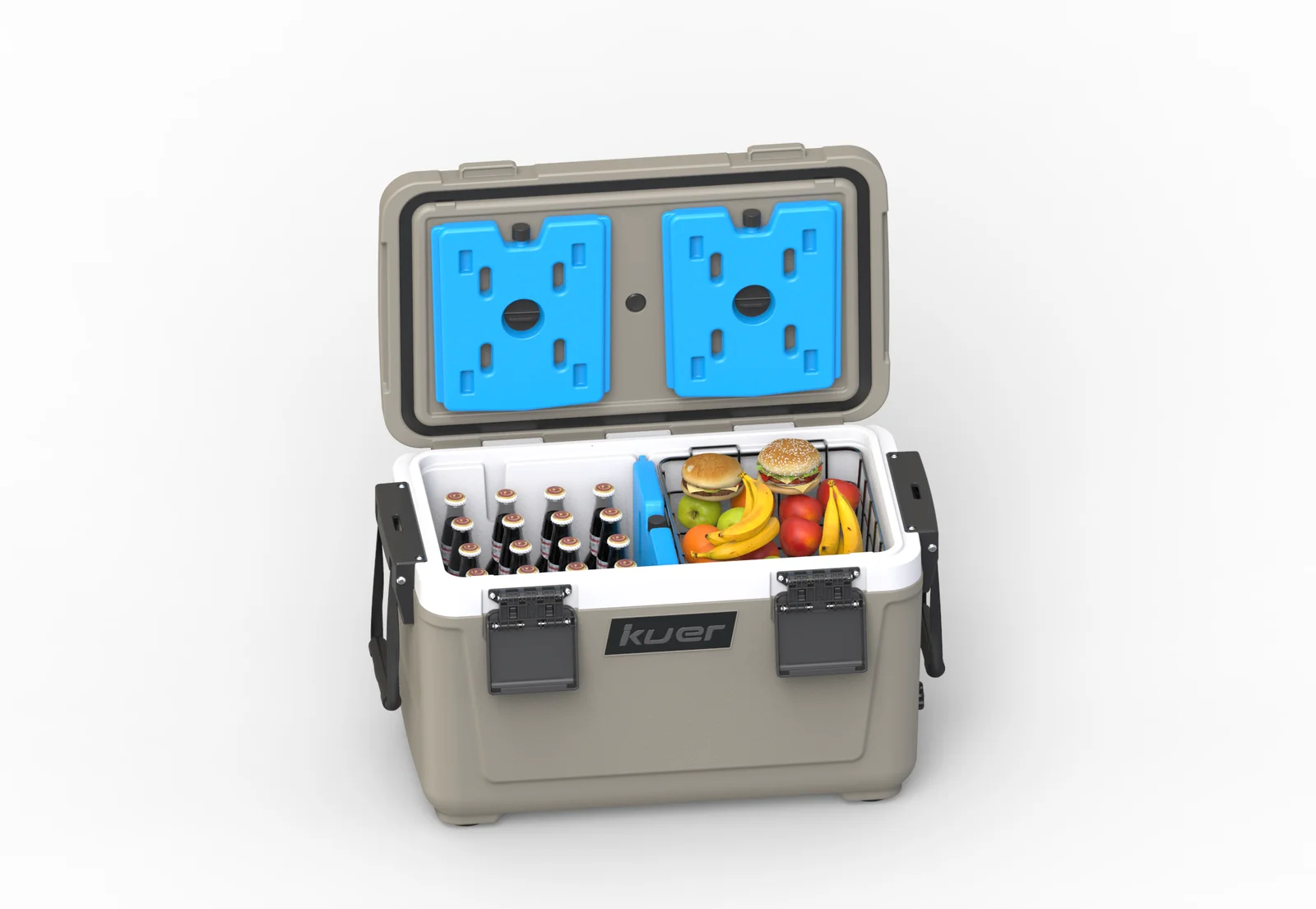
A finished lunch cooler includes more than its molded body. The main system consists of an exterior shell, an interior food-contact surface, an insulating cavity, an insulated lid, a gasket or sealing surface, latches, hinges, and a carrying handle or strap. Each part affects usability. A strong shell cannot compensate for a poor lid seal, and thick insulation cannot correct weak or inconvenient hardware.
For its hard lunch cooler line, KUER identifies LLDPE and polyurethane foam as core materials. Buyers should confirm the exact model’s food-contact documents, dimensions, empty weight, insulation, gasket design, and warranty instead of relying on a category description.
What Are the Benefits and Limitations of a Rotomolded Lunch Box?
Reliable Cold Retention
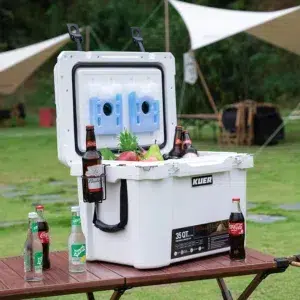
Cold retention begins with limiting the paths that heat can follow. Insulating foam slows conduction through the walls. A fitted gasket limits the exchange of warm outside air with cold inside air. An insulated lid reduces heat gain from the top, which is frequently exposed to sun. A well-designed shell also keeps those elements aligned during transport and repeated opening.
Ambient temperature, direct sun, starting temperature, cold-source quantity, empty space, and lid openings all change retention. A credible claim identifies these test conditions. Ask for the method behind a stated result instead of relying on an unsupported number of days.
Durability for Work and Outdoor Use
A one-piece molded body has fewer shell joints than a body assembled from multiple large panels. That construction helps distribute loads and removes several potential separation points. The rigid walls also protect meal containers from tools, luggage, and loose outdoor equipment. These traits suit job sites, fishing trips, campsites, boats, and vehicles where a flexible bag can be compressed or punctured.
Durability still depends on resin grade, wall consistency, UV stabilization, hardware, and quality control. Drop, load, UV, and temperature claims should identify the exact model and test method. Rotomolding does not make every cooler indestructible.
Important Limitations
The same structure that improves protection adds weight and bulk. Thick walls and a substantial lid reduce the usable interior volume relative to the outside dimensions. It also occupies full storage space when empty and costs more than a simple lunch bag. For a short office commute, the extra protection can be unnecessary. Compare expected use, carrying distance, cleaning needs, and replacement frequency before paying the weight and price premium.
Rotomolded Lunch Box vs. Traditional Lunch Coolers
Hard Cooler vs. Soft-Sided Lunch Bag
A soft-sided bag prioritizes low weight, flexible storage, and easy carrying. It is a practical choice for a light daily lunch, public transportation, or a short walk. A rigid rotomolded model prioritizes protection, structural stability, and insulation potential. It is easier to rinse after loose ice or a spill, but it takes more room and is heavier to carry.
Leak performance is model-specific. Do not call a cooler waterproof without a defined test. Soft bags also vary by seam and liner construction. KUER offers hard coolers and cooler bags, allowing buyers to select around the use case.
Rotomolded vs. Injection-Molded Hard Lunch Box
Injection molding pushes molten plastic into a closed mold under pressure. It supports fast, repeatable production and precise details. Rotational molding uses heat and rotation to coat a hollow mold, making it well suited to large, hollow, seamless parts. An injection-molded cooler can be lighter and less expensive, while a rotomolded body can provide thicker walls and strong joint-free construction.
Neither process determines the entire result. A well-designed injection-molded cooler can outperform a poorly insulated alternative. Compare foam, lid fit, sealing, hardware, measured weight, internal capacity, temperature data, and warranty for the specific models.
Quick Comparison Table
The following ratings describe common design priorities, not guaranteed performance for every product.
| Feature | Rotomolded hard cooler | Injection-molded hard cooler | Soft-sided lunch bag |
| Durability | High potential; rigid, one-piece body | Medium to high; design-dependent | Low to medium; flexible shell |
| Portability | Medium; heavier and non-collapsible | Medium to high; often lighter | High; light and flexible |
| Insulation potential | High with quality foam and seal | Medium to high with quality foam and seal | Medium; varies by liner and seams |
| Cleaning | Easy-to-rinse hard surfaces | Easy-to-rinse hard surfaces | Varies; seams and fabric need care |
| Best use | Job sites, vehicles, fishing, and outdoor use | Daily and general-purpose cooling | Lightweight commuting and short trips |
How to Choose, Use, and Care for a Rotomolded Lunch Box
How to Choose the Right Model
Start with the usable interior, not the advertised exterior size. Review the KUER product catalog against the meal containers, bottles, and cold sources you normally carry, then allow room for air to circulate around the cold source without leaving a large empty cavity. Check the outside dimensions against the intended vehicle, locker, boat compartment, or work area. Empty weight matters because ice, drinks, and food quickly increase the carrying load.
Inspect the lid and gasket for even contact. Operate the latches, drain, handle, and strap. Confirm food-contact documents and cleaning instructions for the exact SKU. Commercial buyers should document warranty scope, color tolerances, logo method, packaging, mold ownership, sample approval, and quality checks before an OEM order.
Packing and Food Safety Tips
Pre-chill the box when practical and refrigerate food before packing. Use frozen gel packs, ice, or frozen water bottles. Pack items close together, reduce empty air, keep the lid closed, and store the cooler in shade. A small appliance thermometer provides better evidence than guessing from how the box feels.
The USDA lunchbox food safety guidance identifies 40 F (4 C) to 140 F (60 C) as the danger zone and recommends at least two cold sources for perishable lunches. Keep meat, dairy, eggs, cut fruit, and similar foods at 40 F (4 C) or below. A durable cooler does not reverse bacterial growth.
Cleaning and Storage
Remove food, ice, and meltwater after use. Wash surfaces with warm water and a mild cleaner approved for the material. Clean the gasket, drain, corners, and lid underside, then rinse and dry completely. Store the box open or unlatched. Inspect the gasket, latches, hinges, drain plug, handle, and strap before the next trip.
Frequently Asked Questions
How long does a rotomolded lunch box keep food cold?
There is no universal duration. Design, starting temperature, outside heat, cold source, packing density, and lid openings determine the result. Use test data with conditions and verify food temperature with a thermometer.
Can you put loose ice inside it?
A model designed to contain meltwater can use loose ice. Confirm the instructions, check the gasket and drain plug, and test for leakage before transport.
 Request a quote
