
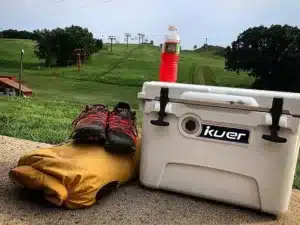
The water droplets and puddles around your rotomolded cooler are normal condensation — not a leak, crack or manufacturing defect. Sweating happens when the cold outer wall of the cooler meets warm, humid outdoor air, causing moisture in the air to condense into liquid on the surface. In fact, visible sweating is usually a sign your cooler’s insulation is working well: the thicker the insulation, the colder the outer shell stays, and the more condensation forms in humid conditions.
This effect is the same as water beading on a glass of iced tea on a hot day. A few simple habits will keep the mess under control, and you can easily tell normal sweat apart from a true leak.
Key Takeaways
- Water on the outside of a rotomolded cooler is normal condensation, not a leak or product defect.
- Condensation forms when cold cooler walls come into contact with warm, moisture-heavy air.
- Place your cooler in a shaded, well-ventilated spot to reduce how much sweat builds up.
- Wipe the exterior dry once or twice a day on humid trips to prevent mold growth on the shell.
- Set a towel or shallow tray under the base to catch drips and protect surfaces from moisture damage.
What Is Cooler Sweat?
Condensation (commonly called “cooler sweat”) forms when water vapor in warm air cools down and turns from gas back into liquid droplets.
You see the exact same effect on a cold glass of iced tea on a summer porch: the cold drink chills the glass surface, and surrounding air loses heat as it touches the glass. The air can no longer hold all its moisture, so droplets collect on the outside of the glass. A cooler box works exactly the same way.
The water comes from the surrounding air, not from inside the cooler. This means exterior sweating does not indicate a leaking lid, cracked shell or failed seal.
Dew Point & Humidity Basics
Dew point is the temperature at which air can no longer hold all of its moisture. When air cools below this threshold, excess vapor turns to liquid.
- Hot, humid days with a high dew point cause fast, heavy condensation on cold surfaces.
- Cool, dry air with a low dew point produces little to no visible sweat.
This is why a cooler may be completely dry in the cool morning, then bead up by midday as temperatures rise. The cooler itself has not changed — the air around it has.
Why Do Rotomolded Coolers Sweat More Than Other Models?
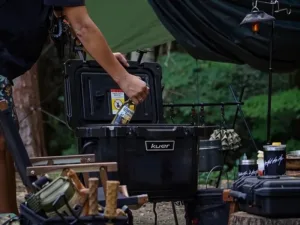
Rotomolded hard coolers are built for maximum ice retention, and that same performance is what causes extra exterior sweating.
Thick PU foam insulation, seamless one-piece construction and tight gasket seals keep frigid air trapped inside the cooler for days. This creates a large temperature difference between the cold outer shell and the warm air outside. The bigger this temperature gap, the faster moisture condenses onto the surface.
Think of two glasses on the same porch: one holding ice water, one holding room-temperature tap water. The ice-cold glass sweats heavily; the lukewarm glass barely sweats at all. A premium rotomolded cooler is like the ice water glass — its strong cooling performance creates the cold surface that drives condensation.
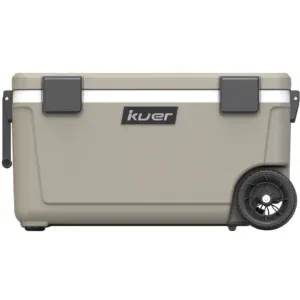
For example, KUER rotomolded cooler boxes use food-grade PE shells and thick PU insulation to deliver 5–7 days of ice retention, with UV-resistant construction and a seamless leakproof design. These high-performance features keep interiors very cold, which naturally causes more visible exterior sweating on humid days. The sweat is not a flaw — it is a side effect of the insulation doing its job.
Airflow Makes a Difference
Still, stagnant air makes condensation worse. A humid layer of air stuck against the cooler shell feeds continuous droplet formation. Steady breeze replaces the moist layer with drier air, slowing buildup and letting the surface dry between droplets.
Is This Normal, or Is My Cooler Leaking?
Most exterior sweating is completely normal. Certain spots naturally collect more moisture than others:
- Lid gasket edge: The rim stays chilled by ice below, so warm air condenses along the seal line.
- Drain plug area: Cold liquid sits near the plug, chilling the outer cap and causing moisture to gather around the threads.
These wet spots are often mistaken for a broken gasket or leaking drain plug.
How to Tell Condensation Apart From a Real Leak
Wipe the area completely dry and watch it for 10–15 minutes:
- Normal condensation: Droplets form slowly and evenly across the cold surface.
- Genuine leak: Water reappears quickly, pools along seams, or comes from inside the box.
When to Check for Issues
Heavy, uneven sweating across the entire shell — paired with noticeably worse ice retention — can signal a problem. Most often this is a worn lid gasket that lets warm air inside the cooler.
- Run a finger along the gasket to check for cracks, flattening or gaps.
- Confirm the lid closes flush on all sides.
- Inspect the drain plug gasket for wear or looseness.
Stagnant standing water on the cooler exterior can also lead to mold growth over time, especially in warm, shaded spots. Wiping the shell dry after each trip prevents this issue.
How to Reduce Cooler Condensation
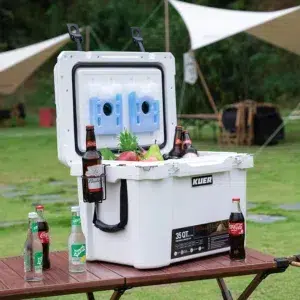
You cannot eliminate sweating entirely on humid days, but these simple steps will control the mess:
- Place in shade with airflow: Direct sun warms the outer shell and worsens temperature swings. Set the cooler under a tree, tarp or vehicle shadow, and leave a few inches of open space on all sides for air circulation. Avoid pressing it against warm walls or burying it under gear.
- Use a drip barrier: Set a towel, rubber mat or shallow tray under the base to catch drips. This protects truck beds, deck wood and tent floors from water stains.
- Wipe periodically on humid days: Dry the exterior once or twice per day on muggy trips, paying extra attention to the drain plug area where water tends to pool.
- Avoid hot surfaces: Don’t set the cooler directly on sun-baked asphalt. Radiant heat from the ground drives more condensation. Use a mat or grassy patch instead.
The goal is management, not total elimination. A well-sealed, well-insulated cooler will always sweat on humid afternoons — that is a sign it is working correctly.
FAQ
Does exterior sweating mean my cooler is leaking?
No. Sweat forms on the outside of the shell when humid air hits the cold surface. A true leak will show up as water inside the cooler or as a fast-growing pool directly under a seam. Wipe the area dry and watch: slow, even droplet formation is normal condensation; fast, concentrated water flow indicates a leak.
Does sweating make my cooler lose ice faster?
No. The droplets come from outside air, not from melting ice. A cold outer wall is actually a sign the insulation is holding cold air inside. Keeping the lid closed and the gasket clean has a far bigger impact on ice retention than exterior sweat.
Can I stop my cooler from sweating completely?
No. Some condensation is unavoidable on hot, humid days. Shade, good airflow and a drip tray will reduce the mess, and periodic wiping keeps the shell dry. The cooler will still work perfectly well even with visible sweat.
Will exterior moisture damage my cooler over time?
The plastic shell itself resists moisture very well. The only real risk is mold or mildew growth if water sits on the surface for long periods. Wiping the exterior dry after each trip and storing the cooler open in a dry area prevents this issue entirely.
Why does my cooler sweat more on some days than others?
Weather is the main factor. Hot, muggy air holds more moisture, so the cold cooler shell pulls far more water out of the air. Cool, dry mornings will leave the surface clear even with the same ice inside. The cooler has not changed — only the surrounding air conditions.

 Request a quote
