

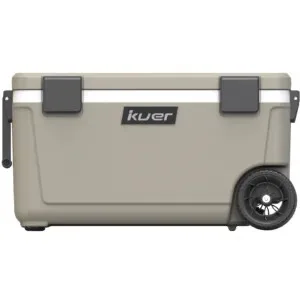
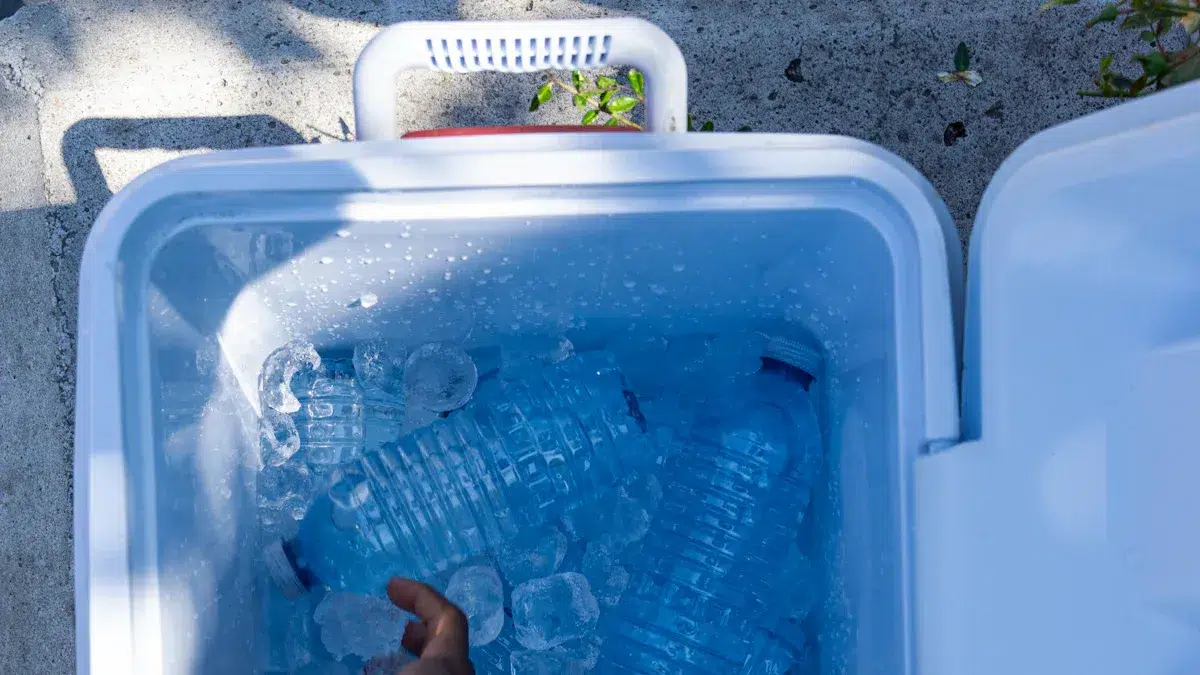
Yes, a blow molded cooler can reliably hold ice overnight when properly pre-chilled, fully packed, and paired with a tight lid seal. Exact ice retention depends on insulation thickness, lid seal quality, ambient temperature, and ice-to-contents ratio. Most standard blow molded models keep ice for 1–2 days total, which easily covers a typical overnight trip with proper preparation.
Key Takeaways
- Blow molded coolers can hold ice overnight with proper pre-chilling, full packing, and a tight lid seal.
- Thick insulation and an airtight lid seal slow melting and extend cold retention.
- Use a 2:1 ice-to-contents ratio by volume and limit lid openings to preserve ice.
- Blow molded coolers are ideal for short trips up to 2 days; rotomolded coolers deliver longer multi-day retention.
- Match cooler size and insulation to your trip length for the most reliable overnight performance.
Blow Molded Cooler Ice Retention Basics
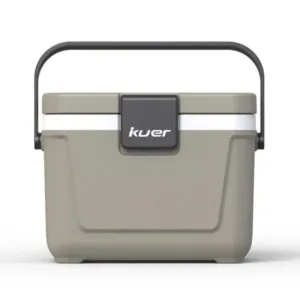
Under typical conditions, water ice in a standard blow molded cooler stays frozen for 12–24 hours — more than enough to last from evening through the next morning. Overnight performance is most reliable when three conditions are met:
- The cooler is appropriately sized for the load (a full cooler retains cold better than a half-empty one)
- The unit is pre-chilled before loading
- The lid closes tightly with a consistent seal
Performance falls below this baseline when insulation is thin, the lid fits poorly, or the cooler is left in direct sun in high heat. Thin-walled blow molded designs are purpose-built for short-trip casual use, not multi-day rugged use.
Key Factors That Impact Ice Retention
Insulation & Lid Seal
Wall and insulation thickness is the biggest driver of baseline ice retention. Thicker foam slows heat transfer into the cooler. For example, the Cubix 25 Quart Viva uses 3 inches of insulation for a rated 5-day cold retention, showing how directly thickness maps to duration.
A tight, airtight lid seal is equally important. Warm air seeping through a loose lid melts ice from the top down. Simple friction-fit lids common on budget blow molded models leak far more than gasket-sealed designs.
Ambient Temperature
Outside heat dramatically changes melt speed.
| Environment | Ice Retention Range |
|---|---|
| Full sun, 90–100°F | ~5 days (black), ~6 days (blue), ~7 days (white) |
| Full shade, ~70°F | ~3 days across all colors |
Lighter-colored coolers and shaded placement extend ice life significantly.
Ice-to-Contents Ratio
A 2:1 ratio of ice to food/drinks by volume is optimal for multi-day trips. More ice creates a larger thermal mass that absorbs heat each time the lid opens. Pre-chilling food and drinks before packing also prevents ice waste from cooling warm contents.
Cooler Size
Larger coolers generally hold ice longer, thanks to thicker walls and a more favorable volume-to-surface ratio. Soft-sided 30–50 quart coolers rarely exceed 24–36 hours of ice retention even with premium foam.
Blow Molded vs. Rotomolded Coolers
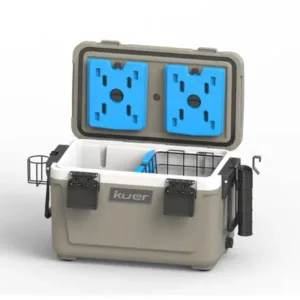
| Attribute | Blow Molded Coolers | Rotomolded Coolers |
|---|---|---|
| Construction | Seamed, thin-wall multi-piece construction | Seamless, thick-walled one-piece construction |
| Insulation | Expanded polystyrene / low-density foam | Pressure-injected high-density polyurethane foam |
| Typical ice retention | 1–2 days (standard); up to 4–5 days (premium thick-foam) | 5–10+ days |
| Upfront cost | $90–$220 | $250–$680 |
| Weight | Lighter baseline | 20–35% heavier |
| Best for | Overnight/short trips (≤2 days), budget use, casual outings | Multi-day trips, heavy-duty use, maximum ice retention |
Blow molded coolers are not universally inferior — premium thick-foam blow molded models can match entry-level rotomolded units for short trips. For strictly overnight use, the difference is rarely noticeable. Brands like KUER offer both build types to match different trip lengths and budgets.
Tips to Maximize Overnight Ice Retention
- Pre-chill the cooler first: Cool the interior walls with ice or frozen gel packs for several hours (or overnight) before packing. Dump the temporary ice right before loading fresh supplies. This simple step improves retention more than most minor gear upgrades.
- Pack near full with a 2:1 ice ratio: Fill the cooler roughly two-thirds full of ice, one-third full of food and drinks. A full cooler has less air space to warm up each time the lid opens. Use block ice for longer retention, or a mix of block and cube ice.
- Limit lid openings: Every lid exchange lets warm air in and cold air out, speeding up melt. Open only when necessary, and close tightly after each use.
- Use dry ice for longer hold times: Standard 1–2 inch insulation coolers hold dry ice for 12–18 hours; premium thick-wall models last longer. Always confirm cooler materials are compatible with dry ice before use.
FAQ
How long does a blow molded cooler keep ice?
Most standard blow molded models keep ice for about 1–2 days total, with water ice staying frozen for 12–24 hours under typical conditions. Careful packing, pre-chilling, and cool placement push results toward the longer end of the range.
Does pre-chilling really help a cooler hold ice longer?
Yes. A pre-chilled cooler doesn’t waste ice cooling down its own interior walls. Pre-chill with ice or gel packs for several hours before packing for the biggest improvement to retention time.
Can a blow molded cooler handle dry ice?
Yes, for limited timeframes. Standard coolers with 1–2 inches of insulation hold dry ice for 12–18 hours. Premium thick-wall models last longer. Always confirm the cooler’s materials are compatible with dry ice’s extreme cold before use.
What ice-to-contents ratio works best?
A 2:1 ratio by volume (two-thirds ice, one-third food and drinks) works best for multi-day trips. More ice creates a larger thermal buffer that preserves cold each time the lid is opened.

 Request a quote
