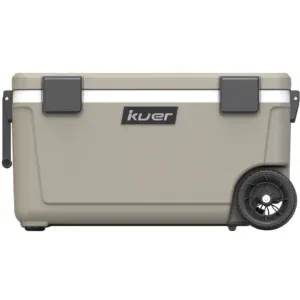

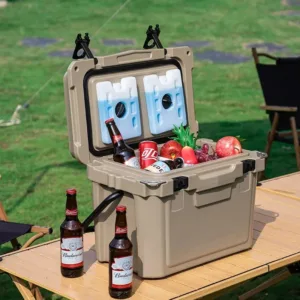
High-end coolers cost significantly more than budget models due to premium materials, slower rotomolding manufacturing, strict durability testing, feature-rich designs, and brand reputation. A $350 flagship cooler next to a $60 basic model may look similar on the surface, but the gap comes down to real differences in ice retention, build toughness, and long-term durability — plus a measurable brand markup for trusted names.
This guide breaks down every cost driver behind premium coolers, explains how rotomolded construction differs from budget builds, and helps you judge whether the upgrade is worth it for how you actually use a cooler.
Key Takeaways
- Top-tier coolers use thick one-piece rotomolded shells and high-density polyurethane foam for multi-day ice retention.
- Rotomolding is a slower, more equipment-intensive process than injection or blow molding, which raises per-unit production cost.
- Heavy-duty hardware, specialized features, and third-party performance testing all add to the final price.
- Brand reputation, marketing, and retail margins account for a large share of the retail price gap between budget and flagship models.
- Premium coolers deliver real value for multi-day trips and heavy use; standard models are more cost-effective for light, occasional use.
1. Premium Materials: The Largest Cost Driver
The single biggest reason for the price gap is build materials. High-end coolers use far more plastic and denser insulation than budget alternatives.
Thick Rotomolded Shell + High-Density Foam
Premium coolers are built with a seamless, one-piece rotomolded polyethylene shell. The thick hollow wall cavity is then pressure-filled with dense polyurethane foam insulation. This creates a continuous thermal barrier that can keep ice for 7+ days.
Budget coolers typically use thinner injection-molded plastic with lower-density expanded foam insulation. They are lighter and cheaper to produce, but lose ice much faster.
| Attribute | Rotomolded Premium Cooler | Injection-Molded Budget Cooler |
|---|---|---|
| Shell construction | Single seamless one-piece build | Multiple assembled plastic parts |
| Wall structure | Thick hollow cavity | Thin, low-profile plastic walls |
| Insulation | High-pressure injected polyurethane foam | Low-density EPS / styrofoam |
| Ice retention | 5–10+ days | 1–3 days |
| Durability | Crack-resistant, impact-absorbing | More prone to cracking under heavy load |
Marine-Grade Hardware
Premium models also use rust-resistant stainless steel hinges, handles, and latch components. These parts cost more upfront, but they last for years in wet, salty, and high-abrasion conditions without failing.
2. Rotomolding Manufacturing: Slower = More Expensive
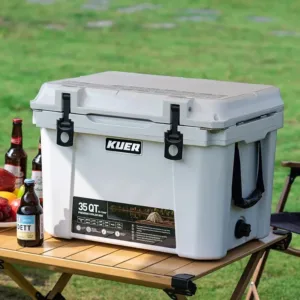
How a cooler is made has a huge impact on its per-unit cost. Rotomolding (the process used for almost all high-end hard coolers) is far slower and more capital-intensive than the injection or blow molding used for budget models.
Manufacturing Process Comparison
| Factor | Rotomolding | Injection Molding | Blow Molding |
|---|---|---|---|
| Cycle time per part | 10–45 minutes | Seconds per part | Seconds to ~1 minute |
| Equipment cost | $50k–$200k per machine | Higher, with hardened steel tooling | High-pressure clamping systems |
| Tooling cost | $3k–$25k | $15k–$100k | ~6–10× rotomolding tooling cost |
| Optimal annual volume | <25,000 units | >50,000 units | Tens of thousands and up |
Rotomolding produces a stronger, more durable seamless part, but long cycle times limit output per machine. This means each unit absorbs a larger share of equipment, labor, and facility overhead.
Assembly & Quality Control Labor
Molding is only the first step. Premium coolers require additional hands-on production stages:
- Pressure-injected foam filling with density verification
- Manual assembly of hinges, latches, gaskets, and handles
- Full inspection of lid seal, wall integrity, and fitment
- Heavy-duty packaging for shipping large, heavy units
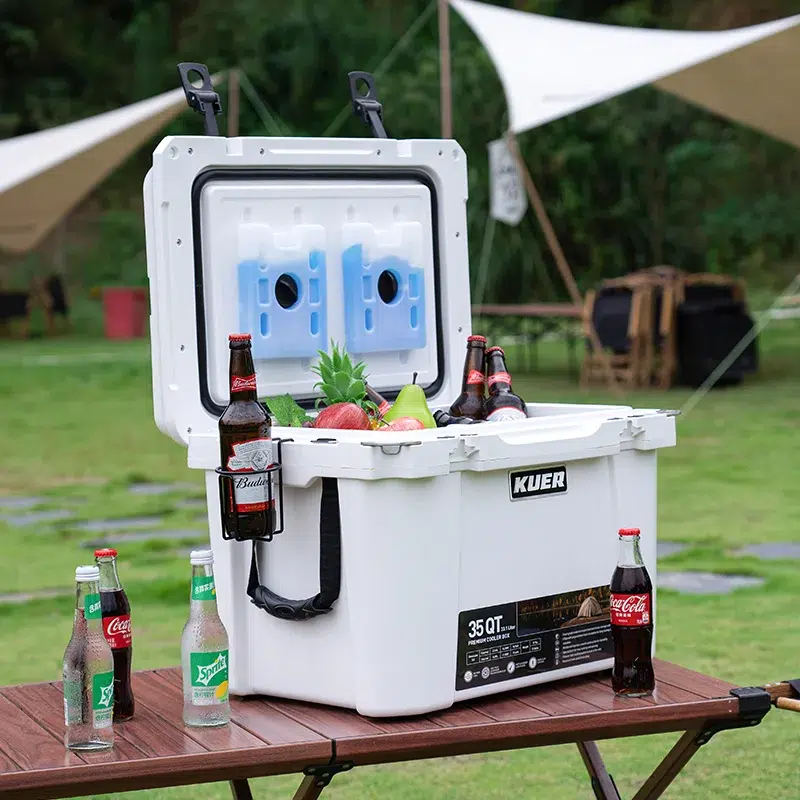
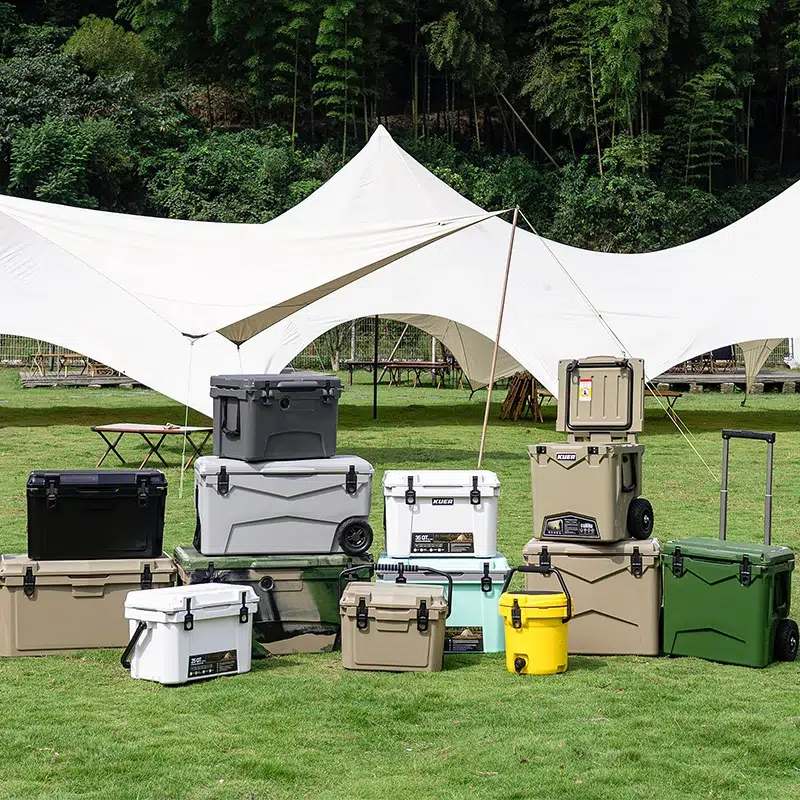
Brands like KUER, a cooler manufacturer, control this entire process in-house across five factories, from mold fabrication to final assembly. End-to-end production delivers more consistent quality but adds layers of labor and quality control costs.
3. Design Features & Performance Testing
Functional Hardware & Accessories
High-end coolers include purpose-built features that add tooling and assembly cost:
- Heavy-duty rubber T-handle latches for an airtight seal
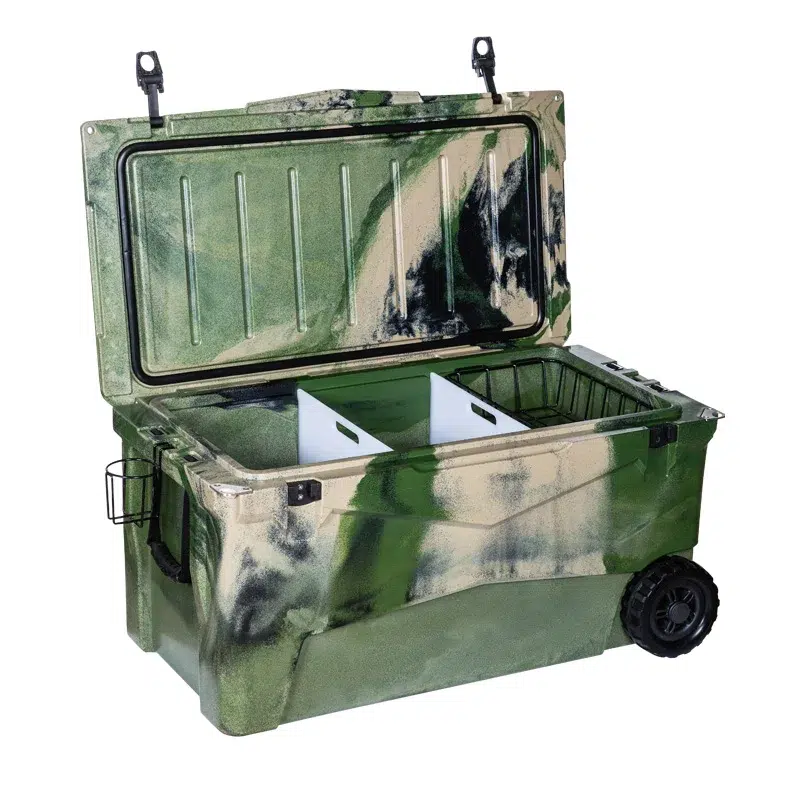
- Telescoping handles and all-terrain wheels for transport
- Internal food baskets, dividers, cup holders, and side table accessories
- Freezer-style rubber gaskets to block warm air infiltration
Each feature requires separate tooling, parts inventory, and assembly time — all of which add to the final price.
Certified Performance Testing
Reputable brands run formal testing to back up their ice retention and durability claims:
- Standardized ice retention testing under controlled conditions
- Cycle testing for hinges, latches, and wheel durability
- Drop and impact testing for rugged use validation
Lab time, equipment, and failed prototype revisions all add cost, but they ensure the cooler performs as advertised when you rely on it in the field.
4. Brand Premium & Market Tier Breakdown
Materials and manufacturing explain part of the price gap, but brand reputation, marketing, and retail margins account for a large share of the retail price difference between tiers.
Cooler Market Cost Tiers
| Market Tier | Typical Retail Price | Estimated FOB Cost | Construction | Insulation Type |
|---|---|---|---|---|
| Budget Mass Market | <$50 | $5–$10 | Thin blow / injection molded | Low-density EPS foam |
| Consumer Grade | $55–$130 | $10–$30 | Thick-wall injection molded | Mid-density expanded foam |
| Professional / Rugged | $160–$290 | $30–$60 | Heavy-duty rotomolded | High-pressure PU injection |
| Elite / Flagship | $350–$600+ | $60–$100+ | Reinforced rotomolded | Specialized high-density foam core |
Industry analysis puts the factory-direct cost of a quality rotomolded cooler at roughly $52–$70. Top name brands retail at 5–6× that production cost, with the gap covering marketing, retail shelf space, brand reputation, and profit margin.
Patent portfolios also contribute to brand value. For example, KUER holds 141 utility model patents and 131 design patents for structural and feature innovations. These investments improve real-world performance, but also add to the overall price.
When Is a Premium Cooler Worth the Cost?
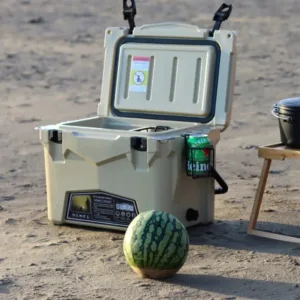
A high-end cooler delivers clear value for frequent, heavy use, but it is not the best choice for everyone.
Worth It If:
- You take multi-day camping, fishing, or off-grid trips
- You use the cooler regularly in hot or rough conditions
- You need reliable ice retention for food safety or long outings
- Durability and repairability matter more than the lowest upfront cost
Stick with Standard If:
- You only use a cooler for day trips, picnics, or backyard events
- Ice only needs to last a few hours
- You prioritize light weight and low cost over maximum retention
FAQ
How long will a high-end rotomolded cooler hold ice?
A quality rotomolded cooler with dense PU foam can keep ice for 7–10+ days under ideal conditions. Thick seamless walls and a gasket-sealed lid are the main drivers of this performance. Budget injection-molded coolers typically lose ice in 1–3 days.
Why does a $350 cooler cost 5–6× more than a $60 model?
The gap comes from four factors: thicker plastic and denser insulation, slower rotomolding manufacturing, durable hardware and testing, plus brand markup for marketing, retail margin, and reputation.
Is rotomolded construction worth the extra money?
Rotomolding delivers a seamless, crack-resistant shell with uniform insulation that holds ice far longer. The upgrade pays off for multi-day trips and heavy use. For casual day-use only, the extra toughness and ice retention are rarely worth the cost.
How much of the price is just brand markup?
Independent analysis puts the landed factory cost of a good rotomolded cooler at $52–$70. Premium name brands retail at several times that figure, with the difference covering marketing, distribution, retail margin, and brand reputation value.
Which cooler is best for occasional use?
A standard injection-molded hard cooler is the most cost-effective choice for day trips and backyard events. For more frequent or extended use, step up to a rotomolded model.
 Request a quote
