
A smelly cooler can ruin a picnic, tailgate, or camping trip before it even starts. Sour milk residue, fish juices, and mildew create persistent odors that get trapped in plastic walls, gaskets, and drain channels. The good news: you can fix it with common household items, no specialty cleaners required.
This step-by-step guide covers how to remove set-in smells, kill mold and mildew, and keep your cooler box fresh trip after trip.
Key Takeaways
- Clean your cooler after every trip to stop food residue and odors from setting in permanently.
- Baking soda and white vinegar naturally neutralize deep odors without harsh chemicals.
- Always dry the cooler completely before storage to prevent mold and mildew growth.
What You Need to Clean a Smelly Cooler
Most homes already have everything you need to clean a smelly cooler.
Basic Cleaning Supplies
- Warm water
- Mild dish soap
- Soft sponge or microfiber cloth
- Baking soda
- White vinegar
- Soft-bristle brush
- Rubber gloves
Tough Stain & Odor Tools
- Household bleach (for mold and mildew)
- Pressure washer (for heavy caked-on gunk)
- Activated charcoal (for lingering odors)
- Imitation vanilla extract (for a fresh scent refresh)
How to Clean a Smelly Cooler Step by Step
1. Empty, Drain & Initial Rinse
Start by removing all food, drinks, ice, and removable parts like baskets and dividers. Toss any spoiled items. Open the drain plug fully and let all standing water flow out — stagnant drain water is one of the top hidden sources of cooler odor.
Rinse the interior thoroughly with warm water to loosen surface grime and food particles. Use a small brush (an old toothbrush works) to scrub inside the drain channel, where trapped food bits collect and rot.
2. Basic Wash With Dish Soap
Wash all interior surfaces — walls, floor, lid, and gasket — with warm water and mild dish soap, using a soft sponge. Pay extra attention to corners and the underside of the lid, where liquid pools and residue builds up.
Rinse completely when done. Leftover soap residue can trap new odors and leave a soapy aftertaste.
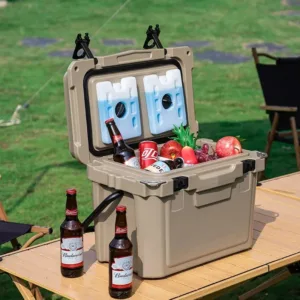
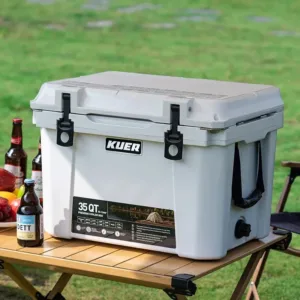
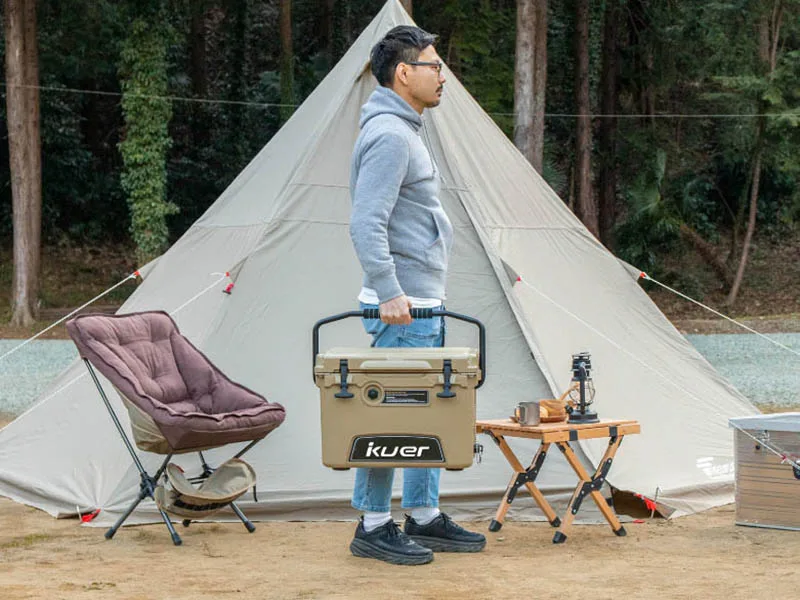
Seamless rotomolded coolers (like KUER cooler boxes) have fewer crevices where grime and bacteria hide, making them easier to clean and less prone to lingering odors.
3. Target Stains & Heavy Gunk
For set-in stains and discoloration:
- Baking soda paste: Mix 3 parts baking soda with 1 part water to form a thick paste. Spread on stained areas, let sit 15–20 minutes, then scrub gently and rinse. The paste pulls grime out of porous plastic surfaces.
- Vinegar spot treatment: Spray undiluted white vinegar on mineral deposits or tough gunk. Let sit at least 1 hour, scrub, and rinse.
- Gasket cleaning: Apply baking soda paste to dark mildew spots on the lid gasket. Let sit 10 minutes, scrub, and rinse. Replace the gasket if mildew has grown deep into the material.
How to Remove Odors From a Cooler
Washing removes surface dirt, but odors trapped in plastic walls and gaskets need targeted treatment.
Baking Soda Soak (Strong Odors Like Fish)
For strong, persistent smells like fish or spoiled dairy:
- Fill the cooler with warm water.
- Add 2–3 boxes of baking soda and stir to dissolve.
- Close the lid and let soak for up to 3 days.
- Empty and rinse thoroughly.
The baking soda pulls trapped odors out of the plastic over time.
Vinegar Spray (Light Odors)
For mild musty smells or post-trip freshening:
- Mix equal parts white vinegar and water in a spray bottle.
- Spray all interior surfaces and the lid.
- Let sit 10–15 minutes, then wipe dry with a clean cloth.
The acetic acid in vinegar neutralizes odor-causing bacteria.
Activated Charcoal (Lingering Odors)
For smells that stick around even after washing: place an open container of activated charcoal inside the closed cooler for 1–2 days. The charcoal adsorbs and traps odor molecules naturally.
Vanilla Refresh Trick
For a quick, mild fresh scent: wipe the interior with a paper towel dampened with imitation vanilla extract. It masks faint remaining odors and leaves a clean, neutral scent.
FAQ
How often should you clean a cooler?
Clean your cooler with soap and water after every trip to remove food residue. Do a deep clean with baking soda or vinegar every 3–6 months for regular use. Always clean immediately after raw fish or heavily soiling spills.
Is bleach safe for cleaning a cooler?
Yes, for non-porous plastic cooler surfaces. Dilute 1 cup of bleach per gallon of water, apply, let sit 30 minutes, and rinse thoroughly. Always work in a well-ventilated area and wear protective gloves.
How do you get fish smell out of a smelly cooler?
A baking soda soak works best. Fill the cooler with warm water and 2–3 boxes of baking soda, close the lid, and soak for up to 3 days. Rinse thoroughly and dry completely. A vinegar spray helps neutralize any lingering odors.
Can you store a cooler with the lid closed?
No. Sealing the lid traps moisture inside, which creates musty smells and mold growth between uses. Store the cooler with the lid slightly ajar to promote airflow. Add a desiccant pack for extra humidity control.


 Request a quote
