

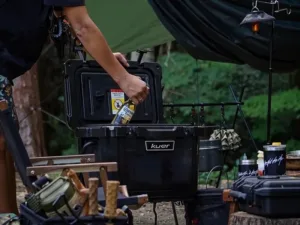
Cooler boxes keep food and drinks cold through two core mechanisms: thermal insulation slows heat from entering from outside, and a cold source (usually ice or ice packs) absorbs existing heat inside the container. Together, they create a stable low-temperature environment that keeps perishables safe for hours or even days on camping trips, picnics, and road trips.
Key Takeaways
- Thick foam insulation and an airtight lid seal slow heat transfer and trap cold air inside.
- Ice absorbs heat through phase change as it melts, holding temperatures near 0°C until fully thawed.
- Wall thickness is the biggest predictor of ice retention: 2–3 inch rotomolded walls keep ice for 5–7 days, while thin budget models last only 12–24 hours.
- Pre-chilling the cooler, using a 2:1 ice-to-contents ratio, and filling empty space all significantly extend cold life.
- Clean and fully dry your cooler after each use to prevent mold, mildew, and persistent odors.
The Science of How Cooler Boxes Work
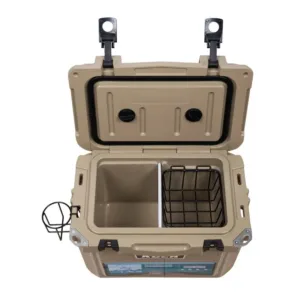
All coolers fight three types of heat transfer to keep interiors cold. Understanding them explains why design choices like wall thickness, lid seals, and color matter so much.
1. Three Pathways of Heat Transfer
| Heat Transfer Type | How It Enters a Cooler | Design Solution |
|---|---|---|
| Conduction | Heat passes directly through solid walls from warm outside to cold inside | Thick foam insulation with tiny trapped air pockets |
| Convection | Warm air flows in through gaps in the lid seal every time you open the cooler | Tight gasket seal, minimal lid openings, full packing to reduce air space |
| Radiation | Sunlight and ambient heat radiate onto the cooler exterior | Light-colored/reflective exterior, parking in shade |
Air is a very poor conductor of heat. High-quality foam insulation traps millions of tiny stationary air pockets inside the walls, acting like a winter jacket for your food. This is the same principle that keeps coffee hot in a thermos — just in reverse.
2. Why Ice Works: The Phase Change Effect
The real cooling power of ice comes from its phase change from solid to liquid, not just from being cold.
- To melt 1 gram of ice, 79.8 calories (334 kJ per kilogram) of heat must be absorbed.
- During the entire melting process, the temperature of the ice-water mix stays steady at 0°C (32°F).
This is why coolers stay reliably cold as long as ice remains — the phase change absorbs heat at a constant temperature. Once all ice melts, the water inside warms quickly. Block ice melts slower than cubes because it has less surface area exposed to warm air, so it delivers longer, more stable cooling.
Insulation Thickness & Ice Retention: What the Numbers Say
Wall thickness is the single biggest factor in how long a cooler holds ice. Below are typical real-world ice retention times for common designs:
| Cooler Type | Typical Wall Thickness | Average Ice Retention |
|---|---|---|
| Budget styrofoam cooler | 0.5–1 inch | 12–24 hours |
| Basic hard-sided cooler | 1–1.5 inches | 2–3 days |
| Mid-range hard cooler | 1.5–2 inches | 3–4 days |
| Heavy-duty rotomolded cooler | 2–3 inches | 5–7 days with block ice |
| Premium cooler + dry ice | 2–3 inches | 3–4 days with 10 lbs dry ice |
A damaged or poorly fitting lid seal can cut ice retention by more than 50%, even on a thick-walled cooler. Gaps let warm convective air rush in every time the lid is opened, and cause constant slow leakage even when closed.
Main Types of Cooler Boxes
1. Passive Insulated Coolers
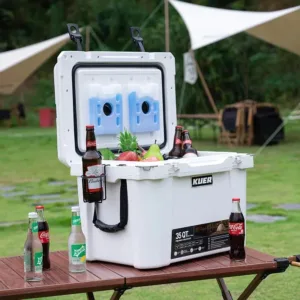
Passive coolers rely entirely on insulated walls and an internal cold source (ice, gel packs, dry ice). They need no power and work anywhere.
- Budget styrofoam: Ultra-light, low cost, but fragile and short-lived. Best for single-day trips.
- Hard-sided injection/blow molded: Durable, affordable, mid-range retention for day trips and picnics.
- Rotomolded heavy-duty: Seamless one-piece construction, thick walls, tight gasket seals. Best for multi-day camping and off-grid use.
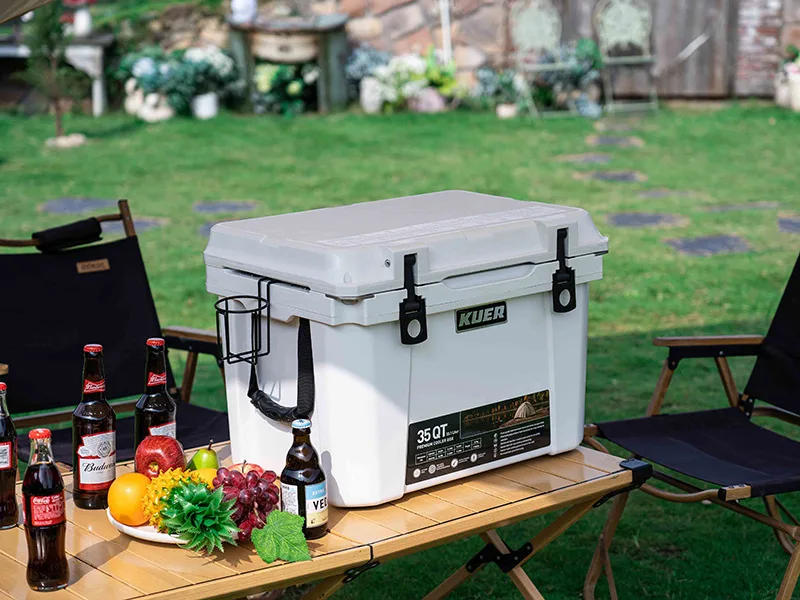
For example, KUER offers a full range of passive coolers for different use cases: 110QT rotomolded wheeled coolers for extended camping, 55QT portable injection-molded models for day outings, 70QT blow-molded wheeled coolers for family picnics, and soft backpack coolers for short hikes. All are designed with balanced insulation thickness and tight lid seals for reliable cold retention.
2. Electric Thermoelectric Coolers (Peltier Effect)
Electric coolers use the Peltier effect instead of ice. When DC current flows through a thermoelectric module, heat moves from one side of the module to the other, cooling the interior while venting waste heat outside. Most plug into a car’s 12V cigarette lighter socket for road trip use.
Key tradeoffs:
- Efficiency is low: Thermoelectric coolers have a COP (coefficient of performance) of only 1.0–1.5, roughly 1/4 the efficiency of standard compressor refrigerators (40–60% efficiency).
- Cooling capacity is modest: They typically cool 20–30°C below ambient temperature, so they work poorly in extreme heat.
- Best for: Short road trips and steady access to car power. They cannot replace passive coolers for off-grid or remote camping.
Pro Tips to Maximize Cooler Efficiency
Pre-Trip Prep
- Pre-chill the interior: Put a sacrificial bag of ice inside 30 minutes before packing to cool the walls. Dump the meltwater before loading fresh ice and food.
- Freeze everything you can: Freeze water bottles, juice boxes, and non-perishable food ahead of time. They act as extra ice and stay cold longer.
- Organize by access frequency: Put items you’ll need first on top, and group items together so you don’t dig around.
During Use
- Keep the cooler in shade whenever possible. Drape a light-colored towel over it in direct sun to reflect radiant heat.
- Drain meltwater only right before adding fresh ice. Cold water insulates remaining ice better than warm air would.
- Use block ice for long trips and cube ice for fast chilling of drinks. Combine both for the best balance.
Long-Term Care & Cleaning
Mold and odors grow quickly in trapped moisture. Follow this routine after every trip:
- Empty all contents and rinse with warm water and mild dish soap. Scrub corners, crevices, and the lid gasket thoroughly.
- Treat tough stains or odors with a baking soda paste (15 minutes) or a 50/50 white vinegar soak (15–20 minutes).
- Dry completely: Invert the cooler, leave the lid open, and remove the drain plug until all moisture evaporates. This is the most commonly skipped step and the top cause of persistent smells.
- Store in a cool, dry place away from direct sunlight, with the lid slightly ajar for air circulation.
FAQ
How long does a standard cooler box stay cold?
It depends on wall thickness and packing. Budget styrofoam coolers last 12–24 hours; mid-range hard coolers hold ice for 2–4 days; heavy-duty rotomolded coolers can keep ice for 5–7 days with proper packing. A poor lid seal can cut retention by over 50%.
Do ice packs work better than loose ice cubes?
Block ice and large frozen packs melt slower than small cubes, so they deliver longer-lasting cold for multi-day trips. Cubes chill drinks faster but melt sooner. Most people use both: cubes for fast cooling, blocks for long-term cold retention.
Should I get an electric cooler or a passive ice cooler?
Choose based on power access. Electric Peltier coolers work well for road trips with constant car power, but they have limited cooling capacity and no off-grid use. Passive ice coolers work anywhere, last longer in extreme heat, and need no power.
Why pre-chill a cooler before loading?
Warm interior walls melt ice immediately on contact, wasting a lot of cooling capacity before you even leave home. Chilling the walls first with sacrificial ice makes fresh ice last significantly longer.
Why does a full cooler stay cold longer than a half-empty one?
Empty air space allows warm convection currents to circulate every time you open the lid, speeding up warming. Filling gaps with ice, frozen bottles, or towels eliminates dead air and slows heat transfer.

 Request a quote
