

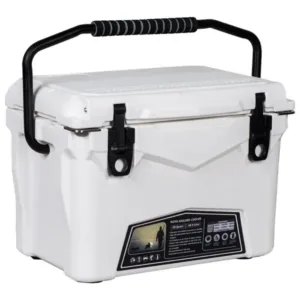
No, injection-molded coolers are not universally better than rotomolded coolers. The right choice depends on your priorities, trip length, and budget. Injection-molded models are lighter, lower-cost, and more design-flexible for short trips and everyday use, while rotomolded coolers deliver superior ice retention and seamless durability for long trips and heavy-duty use.
Key Takeaways
- Injection-molded coolers weigh up to 30% less and cost less upfront, ideal for day trips, tailgates, and casual use.
- Rotomolded coolers have seamless one-piece construction, hold ice for 5–10+ days, and resist cracking under rough use.
- Choose based on your typical trip length, how far you carry the cooler, and your budget.
- Injection molding supports more design features like cup holders and custom shapes.
- Rotomolded coolers cost more upfront but deliver better long-term value for frequent heavy use.
Core Construction Differences Between Injection-Molded Coolers and Rotomolded Coolers
How Each Molding Process Works
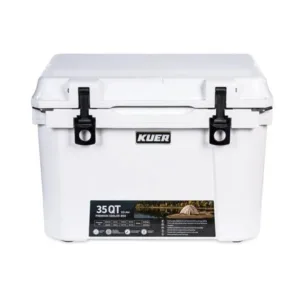
Rotomolding (rotational molding) uses polyethylene powder fed into a hollow two-axis rotating mold inside a 300–400°C oven. The powder melts evenly against the mold walls, forming a single seamless one-piece shell with uniform wall thickness. High-density polyurethane foam is then injected into the hollow cavity for insulation.
Injection molding melts plastic pellets and injects them into a closed mold under high pressure, forming precise parts in seconds. Since it cannot produce a hollow product in one shot, inner and outer shells are molded separately then fused together, with foam added between them. The fused seam areas are the structural weak points.
Side-by-Side Comparison
| Aspect | Injection-Molded Coolers | Rotomolded Coolers |
|---|---|---|
| Construction | Two separate shells fused together; seams are structural weak points | Single seamless one-piece shell; no inherent weak points |
| Insulation | Lower-density foam; shorter ice retention | High-density polyurethane foam; superior ice retention |
| Weight | Up to 30% lighter | Heavier due to thicker walls and dense foam |
| Design flexibility | High; supports complex features like cup holders, hinges, textured finishes | Limited; simpler shapes only |
| Production cycle | Fast (15–60 seconds per part) | Slow (1–4 hours per cycle) |
| Durability | Seams can crack or split under heavy stress | Seamless construction spreads stress evenly; highly crack-resistant |
Cost & Value Comparison of Injection-Molded Coolers and Rotomolded Coolers
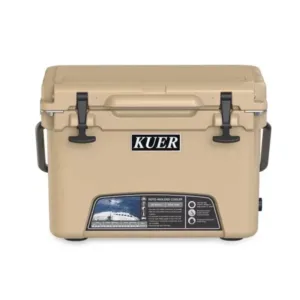
Injection-molded coolers have a lower upfront price tag, driven by faster production cycles and lower material use. Rotomolded coolers cost more upfront, due to slower cycle times and higher material/insulation density, but deliver better long-term value for heavy users.
| Cost Factor | Rotomolding | Injection Molding |
|---|---|---|
| Upfront unit cost | Higher | Lower |
| Mold/tooling cost | Lower (low-pressure process uses cheaper mold materials) | Higher (high pressure requires stronger, more expensive molds) |
| Long-term value | Better for frequent heavy use | Better for occasional light use |
When to Choose Injection-Molded Coolers
Injection-molded coolers are the best fit for casual, short-duration use where portability and low cost are top priorities. Their lighter weight makes them easy to carry by hand, and lower price points fit casual budgets.
Ideal use cases:
- Day trips, park visits, and beach days
- Weekend tailgates and backyard cookouts
- Casual camping and picnics
- Users who want extra features like cup holders, wheeled designs, or custom shapes
Ice retention is sufficient for a few hours to up to 3 days in mild summer weather, depending on size.
When to Choose Rotomolded Coolers
Rotomolded coolers are the superior choice for long trips, heavy-duty use, and maximum ice retention. Their seamless one-piece construction and dense insulation deliver multi-day ice life and rugged durability that stands up to rough transport, off-grid conditions, and extreme use.
Ideal use cases:
- Week-long camping, fishing, or hunting trips
- Professional outdoor guides and field workers
- Heavy-duty use where impact and stress are common
- Users prioritizing maximum ice retention over light weight
High-end models can hold ice for 5–10+ days, and seamless construction resists cracking even under heavy impact.
Final Buying Guide
Match your cooler box to your most common use case:
- Pick injection-molded for casual, short trips, budget priorities, or if you need lightweight portability.
- Pick rotomolded for multi-day trips, heavy-duty use, or maximum ice retention.
No single design is universally better — both serve their intended use cases well when matched to user needs.
FAQ
How long do rotomolded coolers keep ice?
Rotomolded models hold ice for 5–10+ days, thanks to thick walls and dense polyurethane foam. The seamless shell also prevents warm air infiltration.
Are injection-molded coolers strong enough for everyday use?
Yes. They work well for day trips, tailgates, and weekend camping. While fused seams can be weak points under extreme stress, they hold up reliably for normal casual use.
How much lighter is an injection-molded cooler?
Injection-molded models weigh up to 30% less than equivalent rotomolded units, due to thinner plastic walls and lower-density insulation.
Do rotomolded coolers cost more?
Yes. Slower 1–4 hour production cycles and denser insulation drive higher upfront costs. The premium pays off for users who need maximum durability and ice retention.
Which type works best for a family beach day?
An injection-molded model is ideal. It’s light enough to carry across sand, holds ice for hours, and is available in wheeled versions for easy transport with kids and gear.


 Request a quote
