

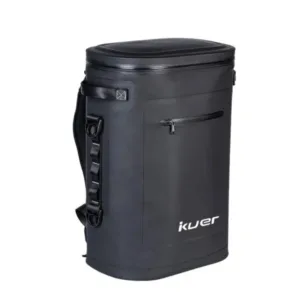
The best insulation for most cooler bags is closed-cell foam, particularly polyethylene (PE) foam, combined with a reflective inner liner. This combination provides a strong balance of thermal resistance, moisture resistance, flexibility, weight, and cost.
However, there is no single insulation material that is best for every cooler bag. PE, EVA, and polyurethane (PU) foam each have different strengths, while foam thickness, liner design, seams, and zippers also affect real-world cold retention.
For manufacturers, distributors, and buyers, the right choice depends on the intended use, required insulation performance, bag weight, durability, and target price.
Key Takeaways
- Closed-cell PE foam is a practical all-around insulation choice for most cooler bags.
- PU foam can provide excellent insulation but generally adds cost and weight.
- EVA foam offers good flexibility, durability, and moisture resistance for lightweight applications.
What Makes an Insulation Material Effective?
Thermal Resistance and Insulation Thickness
Good cooler insulation slows the transfer of heat from the outside environment into the bag. Closed-cell foam works well because its structure contains many small cells that reduce heat transfer through the material.
A thicker insulation layer generally provides greater thermal resistance. However, thickness alone does not determine how long a cooler stays cold. Foam density, thermal conductivity, bag size, outside temperature, ice-pack capacity, liner construction, and how frequently the bag is opened all affect performance.
For this reason, buyers should compare the foam type, thickness, and density rather than choosing a cooler based on thickness alone.
Moisture Resistance and Durability
Cooler bags are frequently exposed to condensation, melting ice, and wet environments, making moisture resistance important.
Closed-cell PE and EVA foams have low water absorption and maintain their insulating properties better than open-cell materials when exposed to moisture. PU foam can also provide strong insulation performance, depending on its formulation and construction.
Durability is another consideration. Foam that maintains its thickness and resilience after repeated compression can help preserve insulation performance over the product’s service life.
Comparing the Best Insulation Materials for Cooler Bags
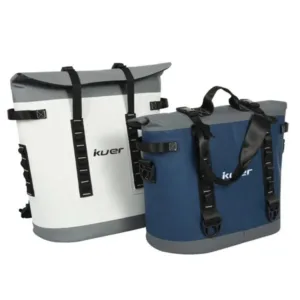
Several foam materials are commonly used in insulated bags. The most relevant options for cooler bags are closed-cell PE foam, EVA foam, and PU foam.
Closed-Cell PE Foam vs. EVA and PU
Closed-cell PE foam is a strong all-around option for cooler bags because it combines low weight, moisture resistance, flexibility, and good thermal insulation. It is particularly suitable when manufacturers need to balance insulation performance with portability and production cost.
EVA foam is also lightweight and flexible, with good resistance to moisture and repeated handling. It can be useful in soft cooler bags and lunch bags where flexibility and durability are important.
PU foam offers excellent thermal insulation and is often selected when maximum insulation performance is more important than minimizing weight and cost. Its higher cost and weight can make it less attractive for lightweight everyday cooler bags.
| Material | Insulation | Weight | Flexibility | Moisture Resistance | Typical Use |
|---|---|---|---|---|---|
| Closed-cell PE | Good–Excellent | Light | Good | Excellent | Lunch bags, soft coolers |
| EVA | Good | Light | Excellent | Excellent | Lightweight coolers, lunch bags |
| PU | Excellent | Heavier | Moderate | Good–Excellent | High-performance coolers |
Which Insulation Material Offers the Best Performance?
For most cooler bags, closed-cell PE foam offers the best overall balance rather than being the absolute best in every individual category.
- Choose PE foam for a balance of insulation, weight, durability, and cost.
- Choose EVA when flexibility and resilience are higher priorities.
- Choose PU when maximum insulation performance is more important than weight and price.
The best material therefore depends on the product’s intended application rather than insulation performance alone.
Choosing Insulation for Different Cooler Bags
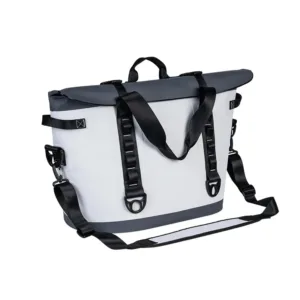
Lightweight Lunch Bags vs. Heavy-Duty Coolers
Different applications require different insulation designs.
Lunch bags usually prioritize low weight, flexibility, and moderate cold retention. Closed-cell PE or EVA foam with a reflective liner can provide a practical balance for daily use.
Outdoor and heavy-duty coolers need stronger insulation and construction because they may remain outside for longer periods and carry larger loads. Thicker foam, a more robust liner, durable outer fabric, and well-sealed closures can improve overall performance.
Balancing Cost, Weight, and Insulation Performance
More insulation is not always better. Increasing foam thickness can improve thermal resistance but also increases material use, weight, bulk, and manufacturing cost.
Cooler bag Manufacturers should select insulation based on the required cold-retention target, bag size, carrying requirements, and selling price.
For a mass-market lunch bag, lightweight PE or EVA may offer the best value. For premium outdoor coolers, higher-performance PU or thicker closed-cell foam may justify the additional cost.
FAQ
What is the best insulation for a cooler bag?
Closed-cell PE foam is a strong all-around choice for most cooler bags because it balances insulation, weight, moisture resistance, durability, and cost.
Is PE or PU better for cooler bags?
PE is generally better for lightweight and cost-sensitive cooler bags, while PU can be preferable when higher insulation performance is the priority.
Is EVA foam good for cooler bags?
Yes. EVA foam is lightweight, flexible, and moisture-resistant, making it suitable for lunch bags and other lightweight cooler applications.
Does thicker foam keep a cooler colder?
Generally, thicker insulation increases thermal resistance, but actual cold retention also depends on the liner, zipper, seams, ice packs, bag size, ambient temperature, and how often the bag is opened.
Does reflective foil improve cooler bag insulation?
Yes. A reflective liner can help reduce radiant heat transfer, especially when combined with an effective foam insulation layer.
 Request a quote
