

To make your factory cooler, you can:
- Put in HVLS fans to move air better.
- Change your roof color to stop heat from coming in.
- Add insulation to your building and equipment.
- Do regular maintenance to prevent problems.
- Change work hours to cooler times.
- Buy zip doors for your factory.
- Use programmable thermostats that stay locked.
Keeping your factory cool helps workers stay safe and work better. Studies show people work 8.9% less when it gets to 86°F. Keeping the right temperature helps workers do their best and miss fewer days. You can use old and new ways, including a product for staff areas.
Key Takeaways
- Install HVLS fans to improve airflow, reduce heat buildup, and create a more comfortable working environment.
- Use a light-colored roof coating to reflect sunlight, lower roof temperatures, and help keep the factory cooler.
- Add proper insulation to reduce heat transfer, improve energy efficiency, and protect equipment from excessive temperatures.
Factory Cooler Solutions
Why Cooling Matters
Cooling is crucial in factories. It prevents machinery from overheating and malfunctioning, thus avoiding delays and saving on repair costs. Cooling also extends the lifespan of precision equipment and ensures its efficient operation. Furthermore, it makes workers feel safer and more comfortable, which translates to fewer workplace injuries and higher productivity.
| Reason | Explanation |
|---|---|
| Prevents Malfunctions | Machines can fail if they get too hot. This stops work and wastes time. |
| Protects Sensitive Equipment | Cooling keeps delicate parts safe. It helps them last longer. |
| Optimizes Performance | Machines work best at the right temperature. This makes the factory more productive. |
| Reduces Production Downtime | Cooling stops heat shutdowns. This keeps production going smoothly. |
Cooling your factory keeps workers safe. Heat stress can cause headaches and tiredness. It can even cause injuries. When it is hot, workers take more breaks and work slower. This lowers how much work gets done.
Main Cooling Challenges
The factory faces numerous cooling challenges. Uneven temperature distribution within the large space makes it difficult to maintain comfort in all areas. Poor insulation allows hot air to enter in summer and cold air to enter in winter. The production process generates additional heat and pollutants, making the air stale and affecting health. Poor ventilation in winter leads to stale air and increased carbon dioxide concentration, affecting employee concentration.
- Heat stress can hurt health. It can cause dehydration and breathing problems.
- High temperatures can lead to more hospital visits for mental issues.
- Bad working conditions can lower productivity by up to 12%.
- Uneven temperatures make it hard to keep a steady climate.
- Many factories have drafts and bad insulation. This causes big temperature differences between work areas.
Airflow and Ventilation
Airflow and ventilation help keep the factory cool. Axial fans circulate air within the space. The size and installation location of the fans must be appropriate to avoid energy waste and turbulence. Air should be distributed evenly to ensure that every area receives fresh air. Avoid direct airflow onto workers, as this can make them uncomfortable.
- Check airflow rates and air speed with tools like an anemometer.
- See if the system can control and remove bad stuff from the air.
- Upgrade your ventilation system to make it work better.
- Keep air moving between 25 to 50 fpm in areas where people work.
- Inspect and clean ducts often to keep air quality good.
Better ventilation can lower factory temperatures by 30°F or more. This helps workers feel better and work more.
Eco and Traditional Methods
You can choose between environmentally friendly or traditional cooling methods. Environmentally friendly cooling consumes less energy and is more environmentally friendly. Natural cooling utilizes outdoor air, saving up to 80% in energy. Liquid cooling uses water, making it extremely efficient, with a Power Usage Effectiveness (PUE) of less than 1.02. Evaporative cooling consumes only 25% of the energy of a regular air conditioner, reducing both electricity bills and greenhouse gas emissions.
- Traditional air cooling uses 30-40% of all energy in a factory. It can leak refrigerants that hurt the environment.
- Eco-cooling lowers costs and carbon footprint.
- Energy recovery systems use waste heat again. This makes cooling more efficient.
| Feature | Traditional Air Cooling | Direct Liquid Cooling |
|---|---|---|
| Initial Cost | Lower | Higher |
| Operational Cost | Higher | Lower |
| Energy Efficiency | Moderate | High |
| Noise Level | Higher | Lower |
| Maintenance | Easier | Needs special skills |
| Heat Dissipation | Not as good for crowded areas | Very good |
| Sustainability | Moderate | High |
You can also use cooling fans, air conditioners, chillers, and cooling towers. Air-cooled chillers are good for food and plastics. Water-cooled chillers need a cooling tower and steady water. Crossflow and counterflow cooling towers fit different factory layouts.
Cost-Saving Tips
Choosing the right refrigeration equipment can save you money. Evaporative cooling systems cost only 10% of a regular air conditioner to operate, have an initial cost that is about 50% lower, and require less maintenance. These systems also introduce fresh air, reducing carbon dioxide levels and thus improving air quality.
- Make airflow go the right way to stop stagnant air and cold spots.
- Use good duct designs with many outlets for even cooling.
- Try advanced cooling like evaporative air coolers.
- Use four-sided cooling pads to help evaporation and stop hot spots.
Water-cooled chillers use 22.6% less water than air-cooled chillers. This saves energy and resources.
| Chiller Type | Annual Energy Consumption (kW) | Difference (kW) | % of Water Use Reduction |
|---|---|---|---|
| Water-Cooled Chiller | 1,610,748 | 1,052,000 | 22.60% |
| Air-Cooled Chiller | 4,663,740 |
Tip: Do not make mistakes like bad evaporator installation, wrong refrigerant charging, and poor airflow direction. These mistakes use more energy and can break equipment.
New cooling solutions, such as prefabricated cooling towers and solid-state cooling systems, offer faster installation, lower construction costs, and reduced energy consumption. These new technologies help lower factory temperatures, reduce environmental impact, and improve production performance.
Recommended Products for Factory Cooling
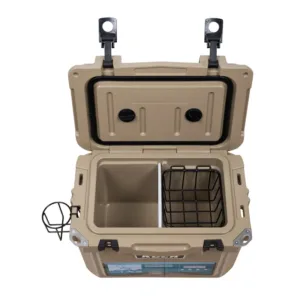
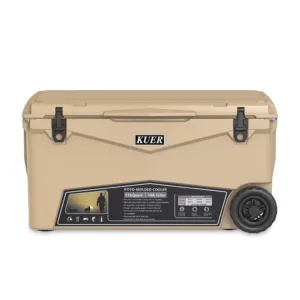
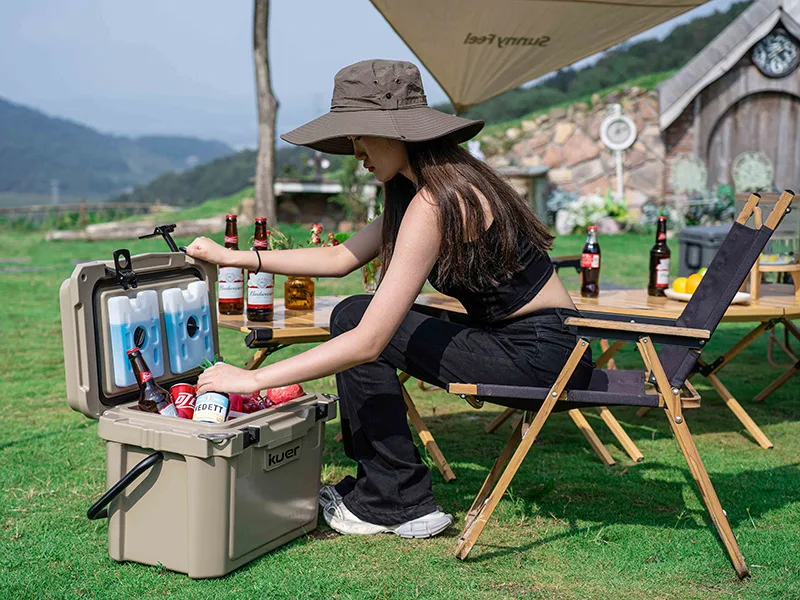
KUER Cooler Box for Staff Areas
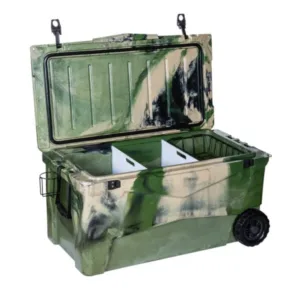
The KUER insulated box enhances employee comfort during work. Lightweight and portable, it’s ideal for placement in break rooms or employee areas. Beverages and snacks can be kept cold for several days. Made with LLDPE material using a rotational molding process, the KUER insulated box is sturdy and durable, able to withstand impacts and frequent use. Its lightweight body and robust handle make it easy to carry. A PU foam insulation layer and sealing gasket ensure the internal temperature remains consistently low. The sealing gasket effectively prevents air from entering or leaving, thus maintaining a low temperature. This insulated box can withstand over 8000 hours of sunlight exposure, performing excellently even in sunny locations.
| Feature | Description |
|---|---|
| Durability | Strong build, resists impacts |
| Insulation Performance | Keeps ice for 5-7 days |
| Portability | Light, easy to carry handles |
| Anti-Aging and UV Resistance | Handles sunlight for 8000 hours |
| Sealed Design | Stops air exchange, keeps things cool |
| Rotomolded Construction | Seamless, resists weather and damage |
Comparing Cooling Products
There are many ways to cool a factory. Mini split-type air conditioning systems provide stable cooling and good temperature control. They can last 10 to 15 years in large factories. Plant-wide cooling products deliver air over large spaces. They do not cool the air itself. Cooling products for employee areas (such as KUER cooling boxes) can cool specific locations and can be replaced as needed.
| Feature/Aspect | Factory-wide Cooling Products | Staff Area Cooling Products |
|---|---|---|
| Design Purpose | Moves air in big areas | Direct cooling or lowers air temperature |
| Airflow Management | Makes air move everywhere | Cools certain zones |
| Temperature Control | Does not lower air temperature | Can lower air temperature |
| Adaptability | Hard to change for new layouts | Easy to change for needs |
| Infrastructure Investment | Needs big investment | Needs less investment |
Choosing the Right Solution
Choose the cooling product best suited to your factory. Consider your factory’s heat, space, and environment. Select the appropriate type of coolant based on your specific needs. Ensure the system is compatible with your building and can be upgraded. Choose products that are easy to maintain and have excellent after-sales service. Suppliers and manufacturers can help you find customized solutions for large-volume orders.
Tip: Check your factory before buying cooling products. This helps you get the best value and performance.
There are many ways to cool a factory. You can install industrial air coolers, improve your ventilation system, or use cooling towers. Carefully assess your factory’s needs, consider different types of cooling towers, and choose the best cooling methods and product combination for your employees and factory.
FAQ
How can you cool a factory without high energy costs?
You can use energy-efficient cooling systems, improve ventilation, and add insulation. These measures can reduce energy costs and help you achieve sustainability goals.
What makes the KUER Cooler Box a good choice for staff areas?
The KUER Cooler Box keeps food and drinks cold for days. It is portable, durable, and easy to clean. Suppliers offer custom sizes for different needs.
How do you choose the right cooling solution for your factory?
Check your factory’s size, heat sources, and workflow. Ask your supplier for custom options. Pick products that match your budget and cooling needs.
 Request a quote
