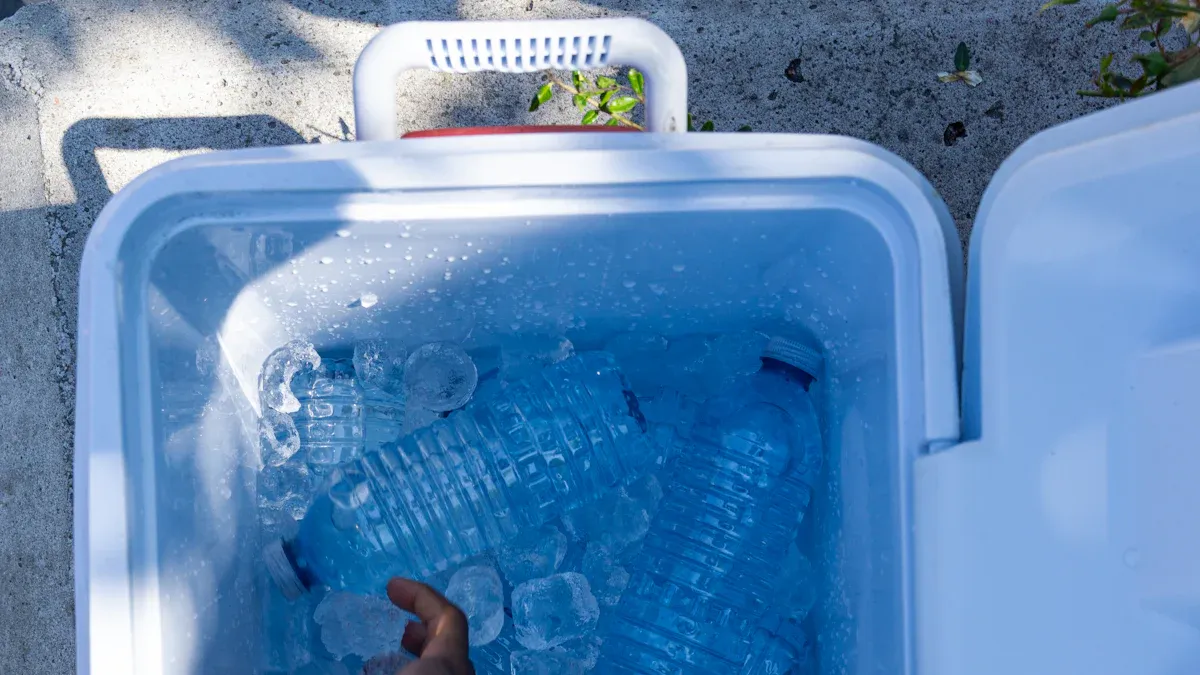

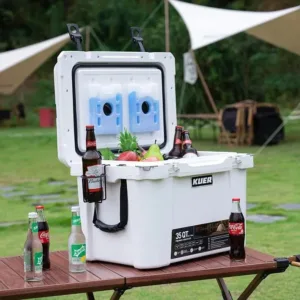
When choosing a cooler, the manufacturing method has a major effect on its durability, insulation, weight, and price. Rotomolded coolers are built as thick, seamless units designed for demanding outdoor conditions, while injection molded coolers are generally lighter, more affordable, and better suited to everyday use.
Neither type is automatically better for every situation. The right choice depends on how long you need to keep food and drinks cold, how much durability you need, how far you need to carry the cooler, and how much you want to spend.
Key Takeaways
- Rotomolded coolers use a one-piece molded body with thick walls, making them better suited to rugged outdoor conditions.
- Injection molded coolers use separately molded components, resulting in a lighter and generally more affordable design.
- Rotomolded models typically offer longer ice retention, while injection molded models are more suitable for shorter cooling periods.
- Weight and portability favor injection molded coolers, especially for users who frequently carry or transport them.
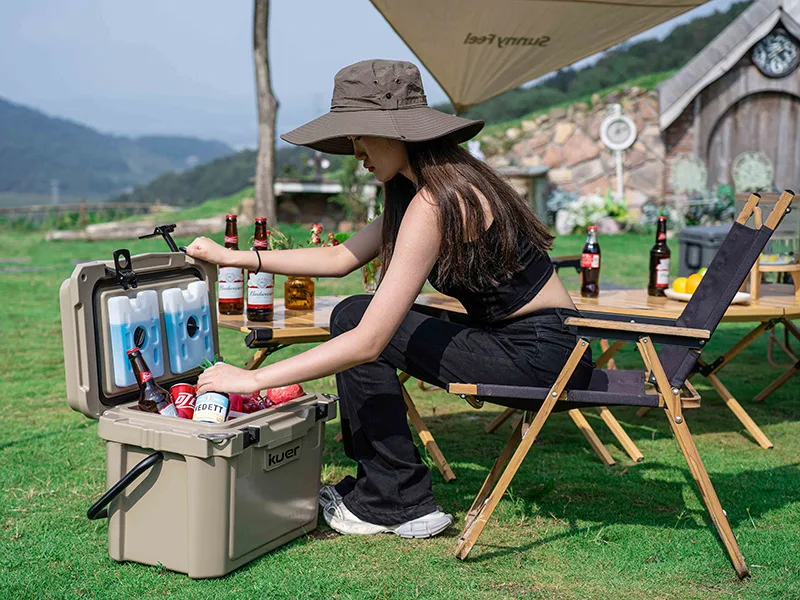
- Choose based on your priorities: rotomolded for durability and extended outdoor use; injection molded for lower weight, cost, and everyday convenience.
How Are Rotomolded and Injection Molded Coolers Made?
The main difference starts with how each cooler box is manufactured. The molding process determines the cooler’s wall construction, insulation design, structural strength, and overall weight.
How Rotomolded Coolers Are Made
Rotomolding, or rotational molding, starts with plastic powder placed inside a hollow mold. The mold is heated and slowly rotated, allowing the plastic to melt and spread evenly across the inside surface.
The result is a single-piece cooler body without seams or joined corners. Manufacturers can also create thick walls and add dense polyurethane insulation between the inner and outer surfaces.
How Injection Molded Coolers Are Made
Injection molding uses a different process. Molten plastic is injected into a metal mold under high pressure to form the cooler components. The inner and outer shells are then assembled and combined with insulation.
This process is efficient for producing large quantities of coolers with consistent dimensions. It also allows manufacturers to use thinner walls and less material, resulting in a lighter finished product.
Rotomolded vs. Injection Molded Coolers: Key Differences
The two manufacturing methods result in different levels of insulation, structural strength, weight, and cost. These differences determine how each cooler performs in practical use.
Durability and Construction
Rotomolded coolers generally provide greater structural durability. Their one-piece construction has fewer seams and joints, while thick plastic walls help the cooler withstand impacts and rough handling.
Injection molded coolers are produced from separate molded components that are assembled into the finished cooler. This construction is lighter and suitable for normal use, but it generally provides less impact resistance than the thicker construction of rotomolded models.
Ice Retention and Insulation
Rotomolded coolers generally provide longer ice retention. Their thicker walls and dense polyurethane insulation reduce heat transfer and help maintain a low internal temperature for extended periods.
Injection molded coolers typically use thinner insulation, resulting in shorter ice retention. As a general reference, rotomolded models can retain ice for around 5–7 days or longer, while injection molded models may provide around 1–3 days, depending on the cooler design and usage conditions.
Weight and Cost
Injection molded coolers have an advantage in both weight and upfront cost. Their thinner construction requires less plastic and insulation, making them easier to transport and generally more affordable.
Rotomolded coolers require more material to create their thick walls and insulation. As a result, they are typically heavier and more expensive. Some injection molded models can be 30–40% lighter than comparable rotomolded models, although the actual difference varies by size and design.
Overall Performance Trade-Off
The main trade-off is straightforward: rotomolded coolers prioritize durability and long ice retention, while injection molded coolers prioritize lower weight and cost.
This distinction makes the two designs suitable for different types of users and outdoor activities.
Which Cooler Is Better for Different Uses?
The better cooler depends on the type of activity, how long you need to keep contents cold, and how much portability you need.
Best for Extended Outdoor Trips
Rotomolded coolers are better for multi-day outdoor activities.
They are well suited to camping, hunting, fishing, and other trips where the cooler needs to perform for several days in outdoor conditions. Their stronger construction and longer cooling performance make them a better fit when durability and extended use are priorities.
Best for Short Trips and Casual Use
Injection molded coolers are better for short outings and everyday recreational use.
They are practical for picnics, beach trips, backyard barbecues, sports events, and tailgating. These activities usually require cooling for only several hours or one day, so a lighter and more affordable cooler can provide sufficient performance.
Best When Portability Matters Most
Injection molded coolers are the better option when the cooler needs to be moved frequently.
Their lower weight makes them easier to carry, load into a vehicle, and transport between locations. This makes them especially useful for users who prioritize convenience over maximum ice retention and heavy-duty construction.
How to Choose Between Rotomolded and Injection Molded Coolers
The decision comes down to balancing durability, ice retention, portability, and cost.
Choose a Rotomolded Cooler for Maximum Durability
Choose a rotomolded cooler if you need:
- Long ice retention
- Thick insulation
- High impact resistance
- A cooler for multi-day outdoor trips
- Frequent use in rugged environments
- Long-term durability
It is particularly suitable for camping, hunting, fishing, and other situations where cooler performance is more important than weight.
Choose an Injection Molded Cooler for Lower Weight and Cost
Choose an injection molded cooler if you prioritize:
- Lower purchase cost
- Easier transportation
- Lower overall weight
- Short-term ice retention
- Day trips and casual activities
- Convenient everyday use
For many casual users, the lighter construction and lower price make injection molded coolers the more practical option.
FAQ
Are rotomolded coolers worth the extra cost?
They are a good choice when you regularly need long ice retention and strong impact resistance. For multi-day outdoor activities, the added durability and insulation can justify the higher purchase price.
Do injection molded coolers keep ice cold?
Yes. Injection molded coolers can provide effective cooling for everyday use. Their shorter typical ice-retention period makes them better suited to day trips and other activities that do not require several days of cooling.
Which type of cooler is easier to carry?
Injection molded coolers are generally easier to carry because they use less material and have a lighter construction. This can make a noticeable difference when the cooler is frequently loaded, unloaded, or transported.
Which cooler is better for fishing?
For multi-day fishing trips, a rotomolded cooler is generally the better option because durability and extended cooling are more important in this type of outdoor use. For short fishing outings, an injection molded cooler may be sufficient.
Can an injection molded cooler be used for camping?
Yes. An injection molded cooler can work well for short camping trips where extreme durability and multi-day ice retention are not essential. For longer or more demanding trips, a rotomolded cooler is the stronger choice.

 Request a quote
