

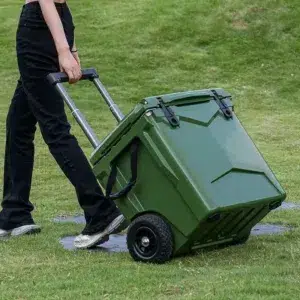
A cooler with wheels can be a better choice when you need to move heavy food, drinks, and ice over long distances. Instead of lifting and carrying the cooler, you can tilt it and roll it to your destination, reducing the effort required to transport a full load.
However, wheeled coolers are not always better. The wheels and handle add weight and bulk, and a traditional cooler may be more practical for short trips or situations where the cooler stays in one place. The right choice depends on how much you carry, how far you need to move it, and the terrain you expect to encounter.
Key Takeaways
- Wheeled coolers make heavy loads easier to transport over long distances.
- Traditional coolers are generally lighter and easier to carry or store.
- A wheeled cooler is usually worth considering for large loads, long walks, and uneven terrain.
Wheeled Coolers vs. Traditional Coolers
| Feature | Wheeled Cooler | Traditional Cooler |
|---|---|---|
| Transport | Roll with wheels and handle | Lift and carry |
| Heavy loads | Easier to move when full | More physically demanding |
| Long distances | More convenient | Can become tiring |
| Empty weight | Usually heavier | Usually lighter |
| Storage | Takes up more space | Generally more compact |
What Are the Advantages of a Wheeled Cooler?
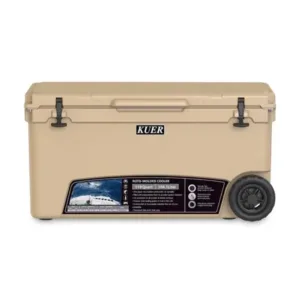
Better for Heavy Loads
The biggest advantage of a wheeled cooler is easier transportation when the cooler is heavily loaded. Ice, beverages, food, and other supplies can add substantial weight, making a large traditional cooler difficult for one person to carry.
With a wheeled design, you only need to lift the cooler enough to engage the wheels and then pull or push it. This can make larger-capacity coolers more practical for solo users.
Wheeled coolers are especially useful for:
- Beach trips
- Camping
- Tailgating
- Outdoor events
- Fishing trips
- Family outings
The heavier the load and the farther you need to travel, the more useful the wheels become.
More Convenient for Outdoor Trips
Wheels can also make outdoor trips more convenient by reducing the number of times you need to lift and set down the cooler.
A sturdy telescoping handle allows you to pull the cooler at a comfortable height, while durable wheels help it move between different locations. Instead of carrying the cooler from the vehicle to the picnic area, campsite, or beach, you can roll it most of the way.
This convenience is particularly valuable when other gear also needs to be carried.
What Are the Drawbacks of a Wheeled Cooler?
More Weight and Bulk
The main trade-off is that wheels, axles, and handles add weight and take up additional space. A wheeled cooler can therefore be harder to lift into a vehicle than a similar traditional model.
This matters most when loading or unloading the cooler. Once it is on the ground, however, the wheels can make transportation much easier.
If you have limited trunk space or frequently need to carry your cooler by hand, a traditional model may be more convenient.
Wheel and Handle Durability
Moving parts introduce another potential point of wear. Wheels, axles, and telescoping handles are exposed to repeated pulling, impacts, and uneven surfaces.
Before buying, check whether the wheels feel stable, the axle is securely mounted, and the handle locks firmly into position. Larger wheels with durable construction are generally more suitable for frequent outdoor use.
A good warranty can also provide additional protection against defects or premature component failure.
When Is a Wheeled Cooler Better?
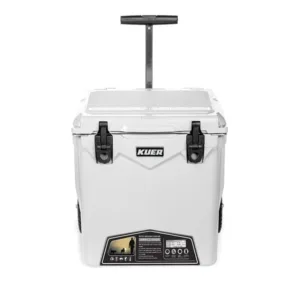
A wheeled cooler is usually the better option when you regularly carry a large load over a significant distance.
For example, rolling a large cooler from a parking area to a campsite or across a beach is much easier than carrying it the entire way. The advantage becomes even greater when the cooler is filled with ice, drinks, and food.
Look for:
- Large wheels with suitable tread
- A sturdy handle
- Secure wheel and axle connections
- Sufficient storage capacity
- Reliable insulation and sealing
The wheels should make transportation easier without compromising the cooler’s overall durability or cooling performance.
When a Traditional Cooler May Be Better
A traditional cooler can be the better choice when portability is not a major concern. It is generally lighter, more compact, and easier to lift into a car or store in a small space.
Traditional coolers work well when:
- The cooler only needs to move a short distance
- The load is relatively light
- Storage space is limited
- The cooler will remain in one location
- You prefer a lighter overall design
In these situations, the extra weight and bulk of wheels may not provide enough benefit to justify the added cost.
Conclusion
The answer to “Is a cooler with wheels better?” therefore depends on how you use it. For heavy loads and long-distance transport, a wheeled cooler can offer significantly better convenience. For lightweight, short-distance, or mostly stationary use, a traditional cooler may be the more practical option.
FAQ
Do Wheeled Coolers Keep Ice Cold as Well as Traditional Coolers?
Wheels themselves do not determine ice retention. Cooling performance mainly depends on the cooler’s insulation, lid seal, construction, and how often it is opened. Compare these features rather than choosing based only on whether the cooler has wheels.
Are Wheeled Coolers Harder to Put in a Car?
They can be. Wheels and handles add weight and bulk, which may make lifting a wheeled cooler into a trunk or truck bed more difficult. However, the same features make it easier to move once it is on the ground.
Are Large Wheels Better for a Cooler?
Large wheels are generally better for uneven outdoor surfaces. They can roll over grass, gravel, dirt, and other obstacles more easily than small wheels. Wider wheels can also perform better on soft surfaces such as sand.
Are Wheeled Coolers Worth It for Short Trips?
Not always. If you only move a small cooler a short distance, a traditional model may be lighter and easier to handle. Wheels become more useful as the cooler gets heavier or the travel distance increases.
What Should I Look for in a Wheeled Cooler?
Pay attention to wheel size and tread, handle strength, axle construction, cooler capacity, insulation, lid sealing, and overall durability. Choose the features based on the terrain, load, and distance you expect to handle.

 Request a quote
