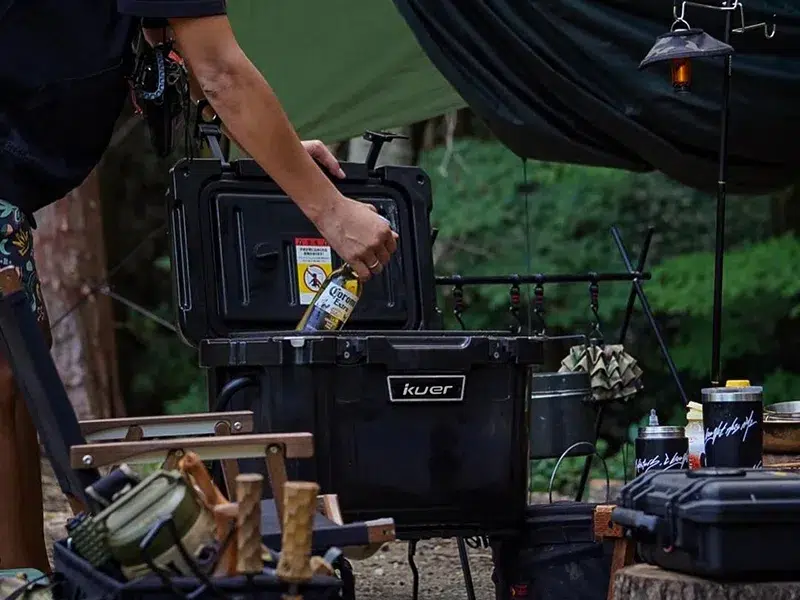

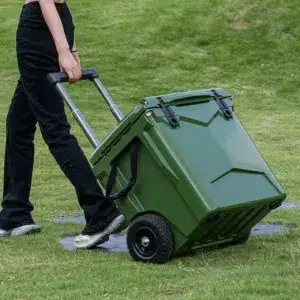
Yes, well-built wheeled coolers keep ice just as long as comparable stationary hard coolers. Wheels themselves have no impact on ice retention performance — insulation thickness, foam density and lid seal quality are the factors that determine how long ice lasts. A wheeled cooler with the same foam specs and gasket seal as a non-wheeled model will deliver nearly identical cold holding performance.
Key Takeaways
- Insulation quality, not wheels, determines how long ice lasts in a cooler.
- Premium wheeled rotomolded coolers match the ice retention of equivalent stationary hard coolers.
- Pre-chill your cooler and use block ice to maximize ice life for any cooler design.
- Keep your cooler in shade and limit lid openings to slow melt rate far more than wheel choice.
- Always compare insulation specs, seal quality and foam thickness when shopping, not just wheel configuration.
What Actually Determines Ice Retention?
Wheels are a mobility feature that has no effect on the cooler’s ability to hold cold. Three core design factors set ice retention performance:
1. Insulation Thickness & Foam Density
Thicker, denser polyurethane foam slows heat transfer better than thin, low-density foam. Premium rotomolded coolers with 2+ inches of PU foam are the industry benchmark for multi-day ice retention.
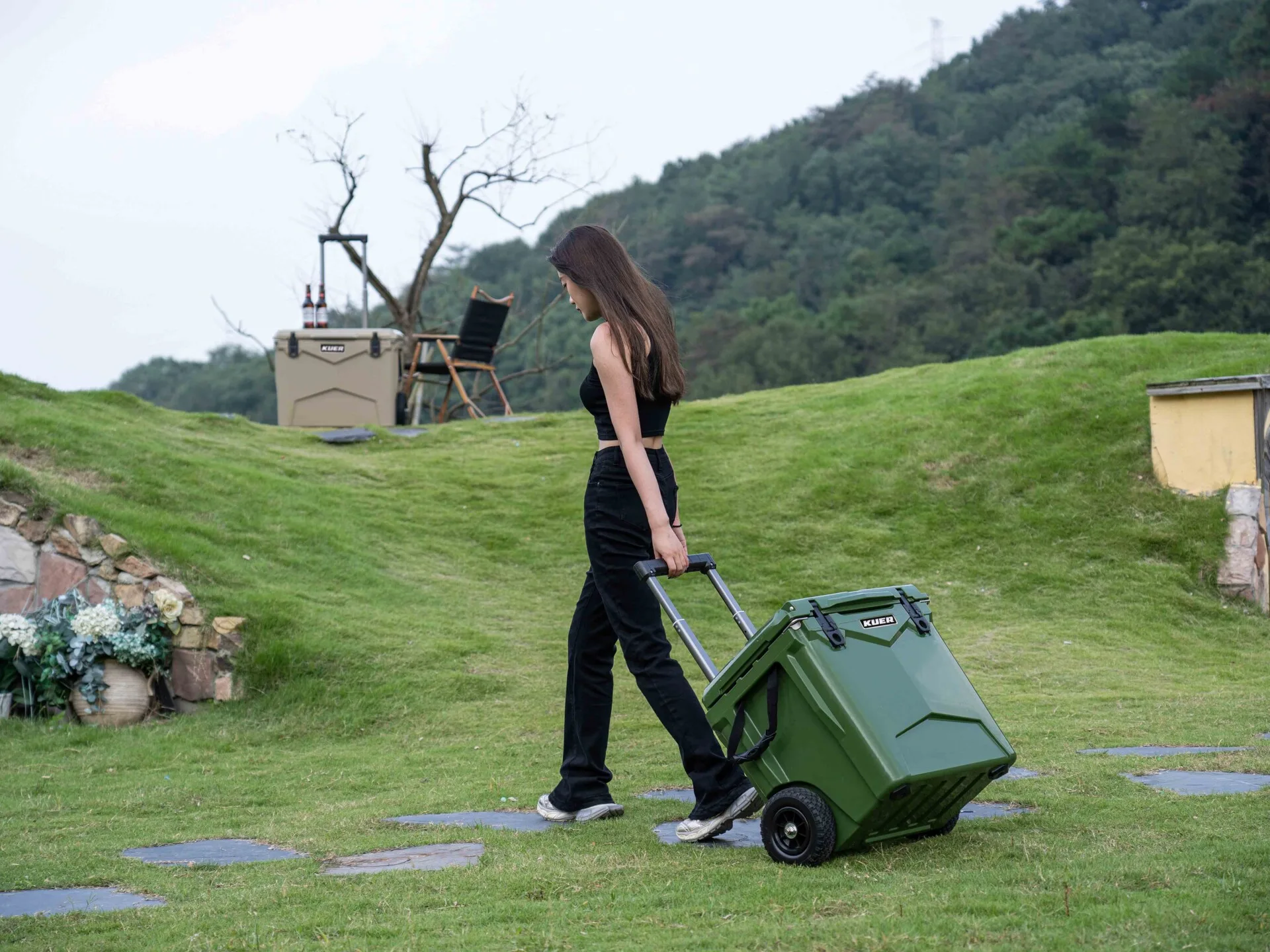
For example, KUER rotomolded coolers use 2+ inches of PU foam insulation and modified LLDPE shells (27J impact strength, MFI 7 melt flow rate) to deliver 5–7 days of ice retention in normal outdoor conditions. This performance standard applies to both wheeled and stationary models built to the same insulation spec.
2. Lid Gasket & Seal Quality
A tight, airtight lid gasket is critical for long ice life. Weak seals let warm air seep in during every opening, speeding up melt. Rubber gaskets can dry out and crack after 1–2 seasons of heavy UV exposure, but replacement gaskets cost under $15 and can restore 1–2 days of ice retention.
3. Drain Plug Seal
A leaking drain plug lets warm air creep in and cold air escape. This applies to all coolers, wheeled or stationary. A tight, clean drain plug gasket matters far more for ice life than the presence of wheel wells.
Wheel wells do take up a small amount of interior volume, but they do not reduce insulation performance as long as the foam wall thickness remains consistent across the full cooler body.
Ice Retention Test Data: Wheeled vs. Stationary Coolers
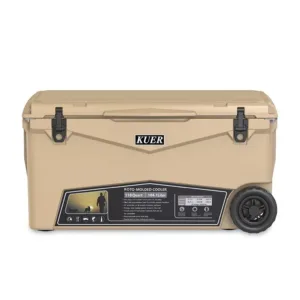
Independent side-by-side testing confirms that insulation specs, not wheels, drive ice retention results.
Side-by-Side Controlled Test Comparison
| Model | Type | Capacity | Insulation | Ice Retention | Test Temperature Range |
|---|---|---|---|---|---|
| Model C (wheeled) | Wheeled rotomolded | 60 qt | 2 in polyurethane | 67.5 hrs | 37°F start → 42°F end |
| Model B (stationary) | Stationary rotomolded | 50 qt | 2.5 in polyurethane | 81.0 hrs | 36°F start → 39°F end |
The ~14 hour gap comes from the difference in foam thickness, not the wheels. A wheeled cooler built with 2.5 inches of foam would match the stationary model’s performance almost exactly.
Real-World Wheeled Cooler Performance Benchmarks
Premium wheeled models deliver competitive multi-day ice retention:
| Wheeled Cooler Model | Published Ice Retention |
|---|---|
| Igloo 70QT Trailmate Journey | 5 days |
| Pelican 45QW Elite Wheeled | ≥24 hours full ice retention |
| ORCA 65-Quart Wheeled | 8 days |
| RovR RollR 60 | 10 days |
These results show that well-built wheeled coolers can match or exceed many standard stationary hard coolers. Insulation quality is always the deciding variable.
Real-World Factors That Matter More Than Wheels
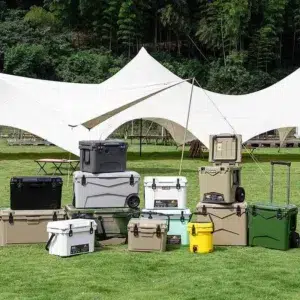
Lab ratings are the upper limit of performance. Real-world ice life depends far more on how you use the cooler than whether it has wheels.
- Pre-chill the cooler: Cool the empty box overnight before loading to avoid wasting ice bringing the walls down to temperature.
- Use block ice: Block ice melts slower than cubed ice due to lower surface area. A 2:1 ice-to-contents ratio is the standard guideline for multi-day trips.
- Limit lid openings: Every opening lets cold air escape and warm air in. Fewer openings add hours of ice life.
- Keep in shade: Direct sunlight heats the cooler walls through radiation. Shade alone can add multiple hours of ice retention.
- Drain water strategically: Meltwater insulates remaining ice, so only drain when water level reaches the contents.
All of these tips apply equally to wheeled and stationary coolers. Good usage habits will improve ice life far more than choosing between wheeled and non-wheeled designs.
FAQ
Do wheels themselves make ice melt faster?
No. Wheels have no effect on how cold the cooler stays. Insulation thickness, foam density and lid seal quality are the real drivers of ice retention. A well-built wheeled cooler matches stationary coolers with the same wall construction.
How long does ice last in a quality wheeled cooler?
A premium rotomolded wheeled cooler with 2+ inches of PU foam and a quality gasket will hold ice for 5–7 days in normal outdoor conditions. Top-tier wheeled models are rated for 8–10 days of ice retention, on par with high-end stationary coolers.
How do you keep food below 40°F on a multi-day trip?
Pre-chill the cooler first, use block ice instead of cubes, and pack at a 2:1 ice-to-food ratio. Keep the cooler in shade and limit lid openings. These habits matter far more than whether the cooler has wheels.
Do drain plugs and wheel wells hurt ice retention?
Rarely. A poorly sealed drain plug will hurt performance on any cooler, wheeled or not. Wheel wells take up a small amount of interior space but do not reduce insulation thickness or cooling performance.
How should I compare wheeled and stationary coolers?
Compare wall thickness, foam density, gasket quality and overall construction on both types. Premium rotomolded coolers deliver similar multi-day ice retention whether they have wheels or not. Judge by insulation specs, not wheel labels.
 Request a quote
