
Hard lunch coolers are better for long-lasting ice retention and tough, rough use, while soft lunch bags win for everyday portability and convenience. Neither type is universally better — the right choice depends entirely on how you use it.
For a short daily commute or school lunch, a soft cooler is usually the more practical pick. For all-day outdoor work, camping, or trips where you can’t restock ice, a hard cooler is the far more reliable option. This guide breaks down the key differences in insulation, durability, cost, and real-world use to help you pick the best fit for your routine.
Key Takeaways
- Hard coolers keep ice cold for days; soft bags work well for short trips and daily use.
- Hard coolers last 10–20 years with proper care; soft bags typically wear out in 3–5 years.
- Hard coolers cost more upfront, but deliver better long-term value through durability and ice efficiency.
- Soft bags are lightweight, easy to carry, and fit perfectly in desk drawers or lockers.
- Choose based on your most common trip length and how far you need to carry the cooler.
Hard vs Soft Lunch Coolers: Key Differences
Insulation & Ice Retention
Insulation performance is the biggest gap between the two designs. Hard-sided coolers use thick foam insulation inside a rigid plastic shell, which traps cold air and blocks external heat far more effectively. Soft-sided coolers use flexible foam layers inside fabric, which works for short periods but loses cold much faster.
| Cooler Type | Ice Retention (Real-World Use) |
|---|---|
| Hard lunch cooler | 24 to 72+ hours, depending on build quality |
| Soft lunch bag | 6 to 24 hours, depending on insulation thickness |
Hard coolers are ideal for multi-day trips, camping, and tailgates, while soft coolers are well suited for short outings, beach trips, and quick hikes. A well-built soft cooler with ice packs will reliably handle a full workday, but a hard cooler is the safer choice when refilling ice is not an option.
Durability & Leak Protection
Shell material determines how well each cooler handles drops, impacts, and spills.
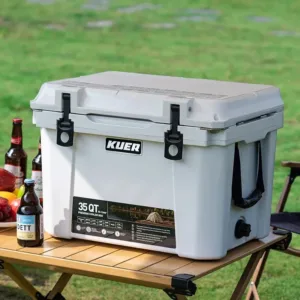
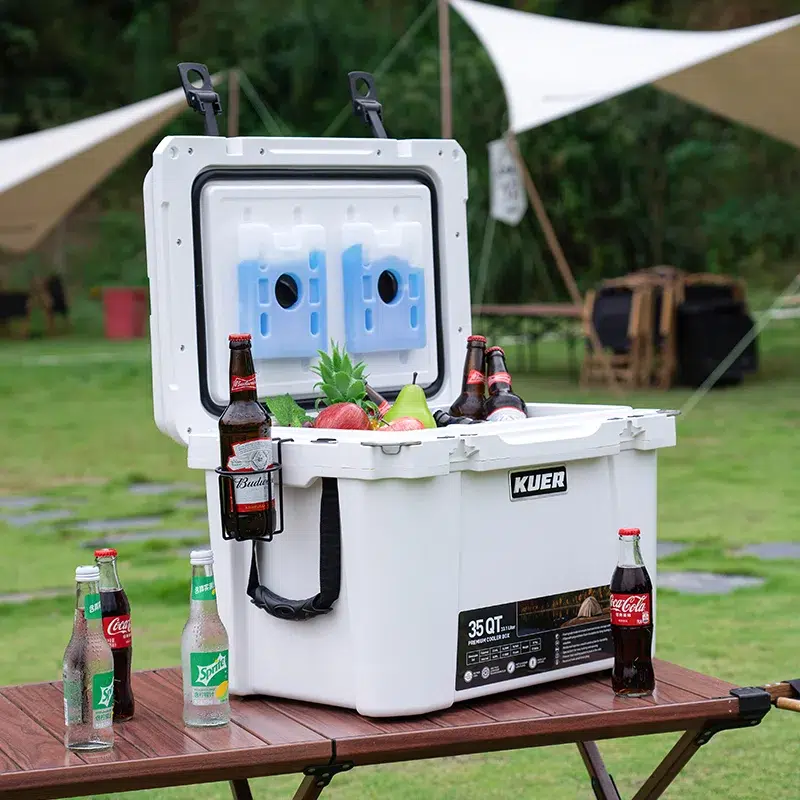
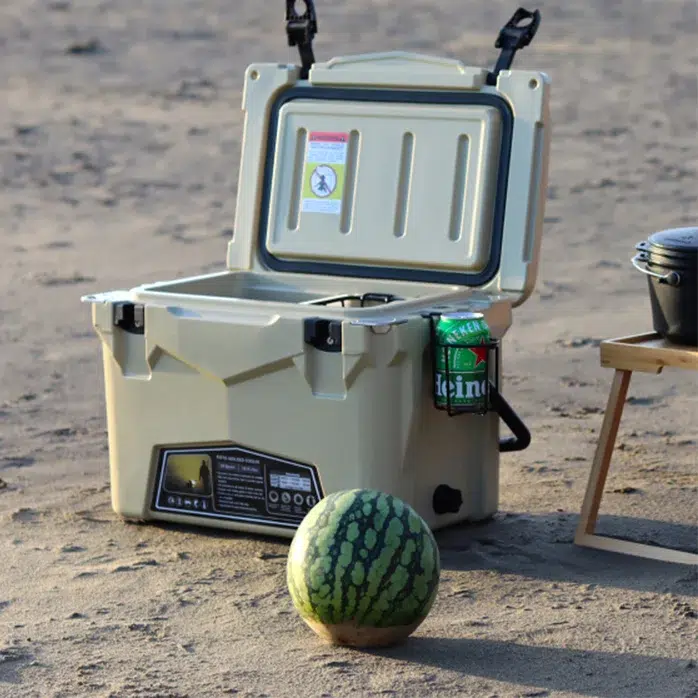
- Hard coolers: Typically made of rotomolded plastic or reinforced rigid plastic. They resist drops, punctures, and rough handling. Seamless shells and secure rubber gaskets create a fully leakproof seal. The KUER Hard Lunch Cooler, for example, survives drops from up to 15 meters and resists UV damage for over 8,000 hours, making it suitable for job sites and outdoor use.
- Soft coolers: Built from high-denier nylon, PVC, or TPU fabric. Welded seams and waterproof zippers with rubber gaskets prevent leaks for everyday spills and rain, but they cannot withstand heavy impacts or punctures the way a rigid shell can. TPU is the most durable premium soft cooler material, with strong welded seams for leak resistance.
Cost & Long-Term Value
Hard coolers have a higher upfront price, but they often deliver better value over time.
| Cooler Type | Average Lifespan | Value Notes |
|---|---|---|
| Hard-sided | 10–20 years | Resists impacts and tears; easy to clean; needs less ice over time |
| Soft-sided | 3–5 years | Fabric shows wear over time; zippers and seams degrade with heavy use |
The KUER Hard Lunch Cooler is a typical example of premium hard-sided performance: it uses a food-grade LLDPE inner layer and PU foam insulation to keep contents cold for up to 5–7 days, a level of retention soft coolers cannot match even with multiple ice packs.
Which cooler Should You Choose?
Choose a Hard Lunch Cooler If:
- You need food to stay cold for 8+ hours, or for multi-day trips
- You use the cooler on job sites, camping trips, or rough terrain
- You want a long-lasting investment that won’t need replacement in a few years
- You prioritize maximum leak protection and food safety
Choose a Soft Lunch Bag If:
- You only need cold food for 4–6 hours for work, school, or a short outing
- You carry the cooler by hand or in a bag for a daily commute
- You need to fold or store the cooler flat in a desk, locker, or backpack
- You prioritize light weight and low upfront cost
A good rule of thumb: match the cooler to your most frequent use case, not your occasional weekend trip. If you commute 5 days a week and camp once a month, a soft bag for daily use plus a small hard cooler for trips will serve you better than one heavy hard cooler you carry every day.
FAQ
How long does a hard lunch cooler keep food cold?
A well-built hard cooler keeps contents cold for days, not hours. The KUER Hard Lunch Cooler, for example, maintains cold temperatures for up to 5–7 days with proper packing. Adding more ice and keeping the cooler in shade extends retention further.
Do soft lunch bags need ice packs to work?
Yes, most soft bags rely on ice packs for cooling. Their flexible foam insulation loses cold faster than rigid hard walls. Two ice packs will usually cover a full workday in mild weather; hotter temperatures require more packs or a switch to a hard-sided cooler.
Which type handles drops and rough handling better?
Rigid hard shells deflect impact and hold their shape far better. The KUER Hard Lunch Cooler survives 15-meter drops and resists UV damage. Soft bags work fine for everyday use, but fabric and zippers will show wear and tear much sooner.
Is a hard cooler worth the higher price?
For most frequent users, yes. Hard coolers cost more upfront, but they last far longer, use less ice over time, and deliver more reliable food safety. Soft bags are a better value only for light, short-term occasional use.
Can you use a hard lunch cooler for a daily commute?
Compact hard coolers work for short commutes, especially with a sturdy handle. Soft bags still win for all-day carry and easy storage. If you have a very short walk to work, a hard cooler works well; if you carry your lunch for long distances, a soft bag will be more comfortable.

 Request a quote
