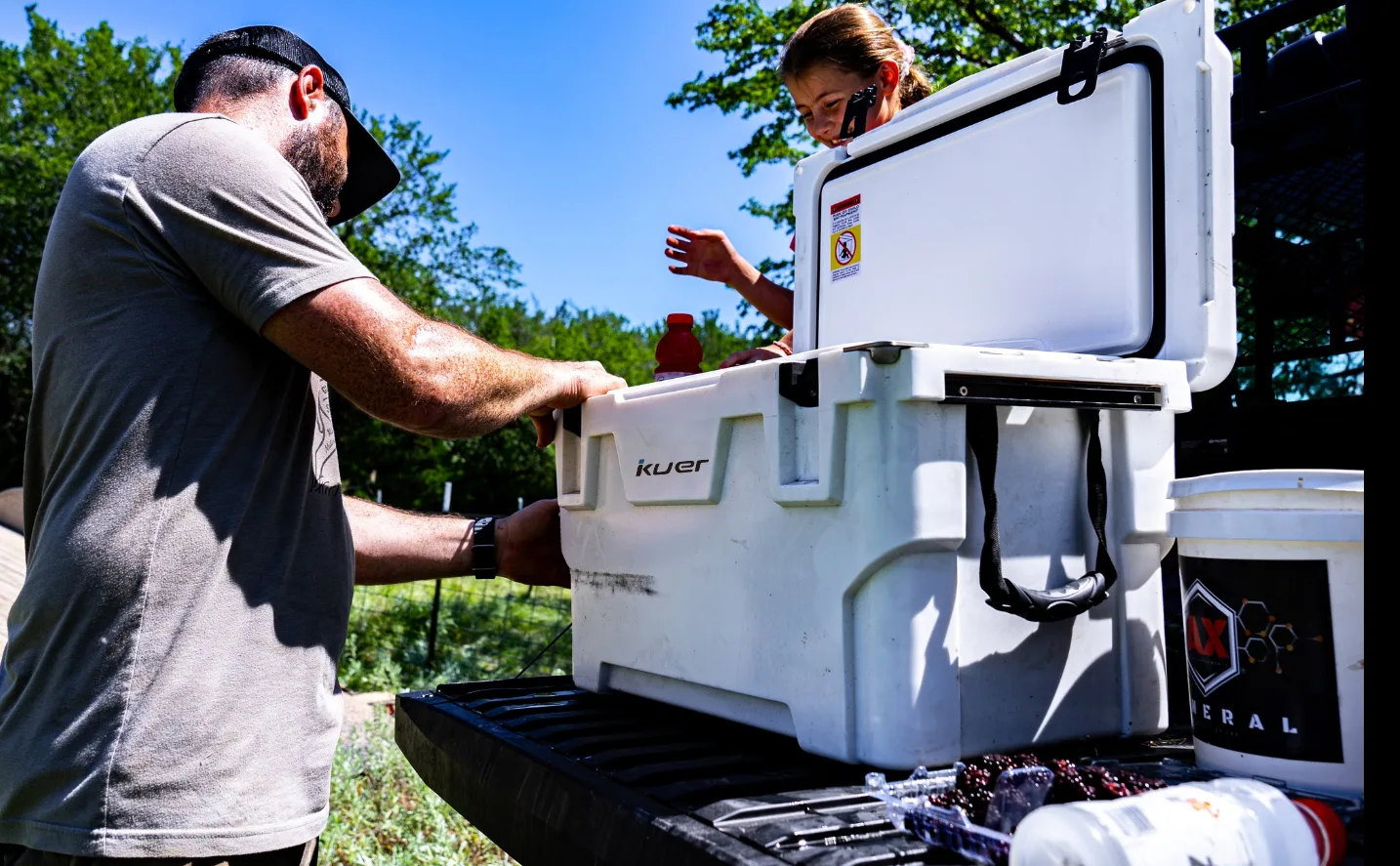

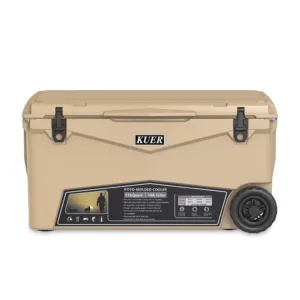
In high-quality rotomolded coolers like those from KUER, dry ice typically lasts between 18 and 24 hours. The exact duration depends on the quantity of dry ice used, as well as the frequency with which the lid is opened. The cooler’s insulation performance, the amount of dry ice utilized, the ambient external temperature, and the number of times the unit is accessed are all critical influencing factors. For instance, compared to Styrofoam coolers, rotomolded coolers are capable of maintaining the low temperatures provided by dry ice for a significantly longer period. Please refer to the table below for estimated durations:
| Cooler Type | Duration (Small Blocks/Pellets) | Duration (Large Blocks/Slabs) |
|---|---|---|
| Styrofoam Cooler | 12–24 hours | 18–36 hours |
| Rotomolded Cooler Box | 18–24 hours | 24–48 hours |
| Emergency Storage | 18–24 hours (small block) | 2–3 days (large block) |
Key Takeaways
- In a rotomolded cooler, dry ice typically keeps temperatures low for 18–24 hours, while larger blocks can extend cooling up to 48 hours.
- Choose a cooler with thick insulation—such as KUER models—to better retain cold air and block external heat.
- Pre-chill the cooler and pack contents tightly to maximize cooling efficiency and extend dry ice performance.
- Place a layer of cardboard between dry ice and food to create a protective barrier and improve food safety.
- Limit how often the cooler is opened, as warm air entering will accelerate dry ice sublimation.
- Combining dry ice with regular ice cubes can further extend cooling time and maintain safe food temperatures longer.
Dry Ice Duration In A Rotomolded Cooler Box
Typical Time Range
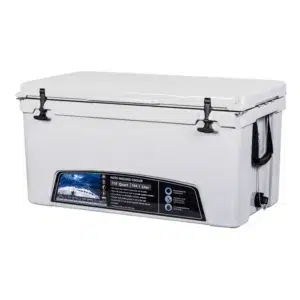
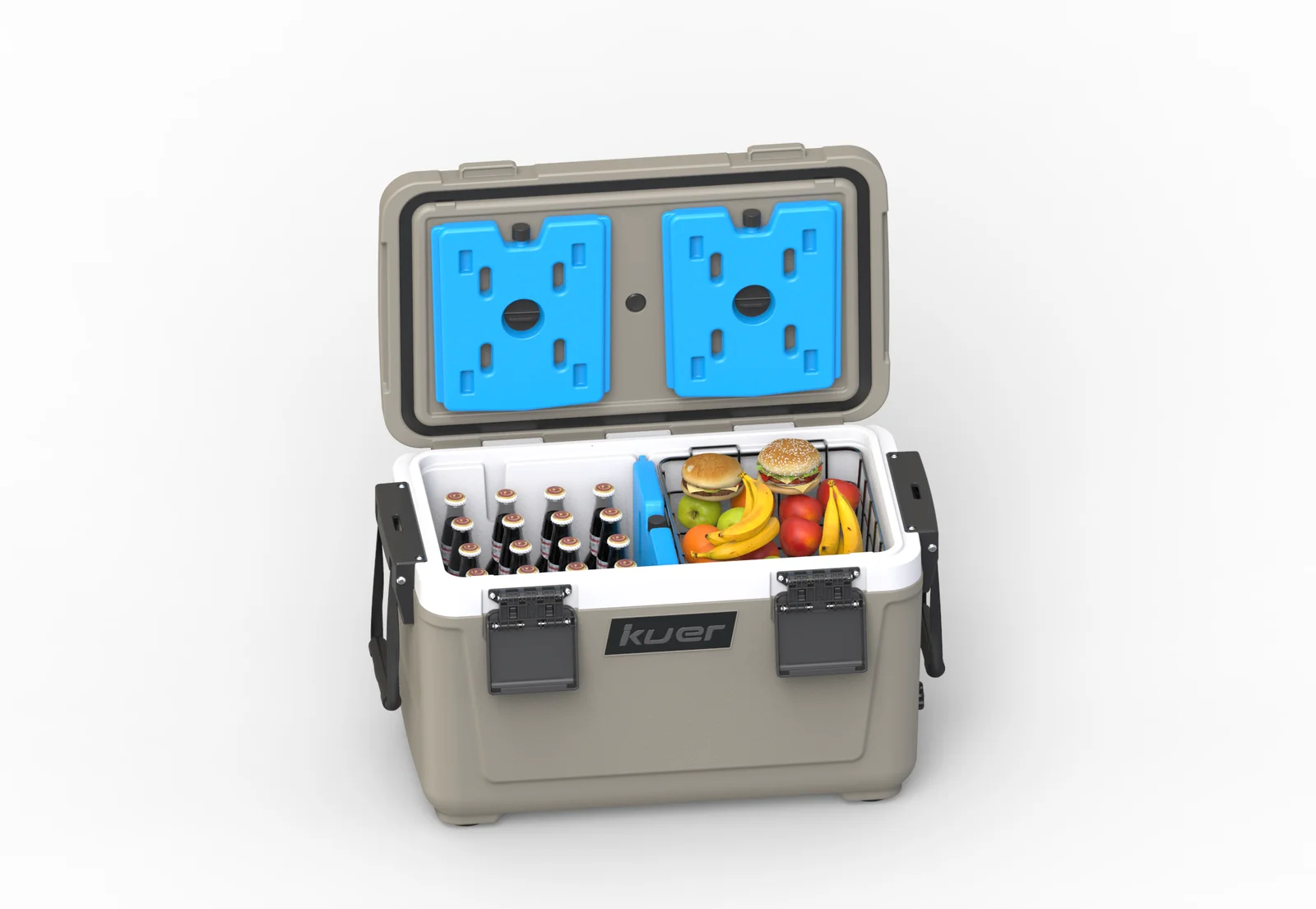
Naturally, you want your food and beverages to stay cold for as long as possible. Dry ice is an excellent choice for achieving this goal, particularly when paired with a rotomolded cooler. Most users find that within a high-quality rotomolded cooler, the cooling duration provided by dry ice typically ranges from 18 to 24 hours. If you use larger blocks of dry ice, this cooling time can be extended even further—up to 48 hours. KUER rotomolded coolers stand out thanks to their thick insulation layers and seamless, one-piece construction. This design helps ensure that the cooling effect of the dry ice lasts significantly longer than it would in a standard cooler.
Adding a larger quantity of dry ice will extend the cooling duration even further. For instance, placing 5 pounds of dry ice in a standard cooler provides approximately 18 to 24 hours of cooling; increasing the amount to 10 pounds extends that time to between 24 and 36 hours. In a high-end cooler, however, using 20 pounds or more of dry ice can result in a cooling duration of up to 72 hours. Clearly, both the quantity of dry ice used and the type of cooler employed play a critical role in determining the effectiveness of the cooling performance.
Tip: If you wish to maximize the cooling duration of the dry ice, it is recommended that you place your rotomolded cooler in a shaded area and open the lid only when necessary to retrieve items.
Duration Table By Weight And Size
Next, we will provide a detailed breakdown of the duration of dry ice, based on the quantity used and the dimensions of the insulated container. The table below offers a visual overview for your reference:
| Dry Ice Amount | Cooler Size | Approx. Duration |
|---|---|---|
| 5 lbs | Small (20-30 qt) | 18-24 hours |
| 10 lbs | Medium (40-60 qt) | 24-36 hours |
| 20+ lbs | Large (65+ qt) | 48-72 hours |
By choosing a KUER rotomolded cooler, you gain access to trusted, exceptional performance. Its thick polyurethane insulation layer ensures that dry ice maintains low temperatures for extended periods. We invite you to compare KUER against renowned brands such as YETI and RTIC. Whether it is the YETI Tundra 65 or the RTIC 65, when placed in a shaded area and opened infrequently, these coolers can retain ice for over seven days; thanks to its advanced rotomolding process and food-grade materials, KUER offers comparable durability and superior cooling and preservation capabilities.
Clearly, a rotomolded cooler is the optimal choice for keeping dry ice at low temperatures for the longest possible duration. If you are planning a camping trip or intend to spend a long day outdoors, be sure to select a cooler featuring thick insulation and a robust construction. With KUER, you can effortlessly ensure that your food and beverages remain both safe and refreshingly cold.
Key Factors Affecting Dry Ice Duration in a Rotomolded Cooler Box
Cooler Insulation And Build
When selecting a cooler, thermal insulation performance is of paramount importance. KUER rotomolded coolers feature a thick layer of polyurethane insulation. Furthermore, they are constructed from robust, food-grade materials built for durability. This design effectively locks cold air inside the cooler while simultaneously blocking the intrusion of external heat. The cooler’s thick, seamless (one-piece molded) walls help extend the preservation time of dry ice. The following points are worth noting:
- Coolers made from thin plastic or fabric materials tend to lose thermal energy very quickly.
- In contrast, rotomolded coolers boast a thick insulating layer and sturdy, durable construction.
- Thick walls combined with superior insulation performance help significantly extend the effective lifespan of dry ice.
If you need dry ice to remain in a solid state for an extended period, it is essential to choose a cooler with a sturdy structure and solid craftsmanship. The KUER rotomolded cooler is the ideal choice for your needs.
Amount Of Dry Ice
Using a larger quantity of dry ice allows items to remain cold for a longer duration. Small amounts of dry ice dissipate quickly, whereas larger blocks or slabs last significantly longer. If you place more dry ice inside an insulated container, the cooling time will extend accordingly. Small pellets of dry ice tend to sublimate rapidly due to their larger surface area in contact with the air; therefore, for long-distance travel, it is recommended to use larger blocks of dry ice.
Ambient Temperature
External temperatures affect the rate at which dry ice sublimates. If you place an insulated cooler in direct sunlight, the dry ice will sublimate more rapidly. In an environment of approximately 70°F (21°C)—provided a cooler with good insulation is used—dry ice is consumed at a rate of roughly 5 to 10 pounds per 24 hours. If temperatures rise or strong winds are present, the sublimation rate will accelerate even further. Rotomolded coolers, such as those made by KUER, help slow the loss of dry ice because their thick walls effectively block external heat.
Opening Frequency
Opening the insulated container allows warm air to enter, thereby accelerating the sublimation (melting) of the dry ice. To extend the storage life of the dry ice, please open the lid only when absolutely necessary. It is recommended to plan ahead to minimize the number of times the container is opened; the fewer times it is opened, the longer the contents will remain cold.
Tip: Keep the insulated container closed as much as possible to extend the lifespan of the dry ice.
Maximize Dry Ice Life In Rotomolded Cooler Box
Pre-Chill The Cooler
Naturally, you want the cooling effect of your dry ice to last as long as possible, right? First, please pre-chill your rotomolded cooler. Move the cooler indoors and fill it completely with regular ice, allowing it to sit for at least 24 hours. This step not only lowers the internal temperature of the cooler but also thoroughly eliminates any residual heat remaining inside. If time permits, we recommend pre-chilling your food and beverages before packing them. When packing, start by laying a layer of ice at the bottom, place your pre-chilled items inside, and finally, cover the top with another layer of ice. When you are ready to add the dry ice, be sure to wrap it in newspaper and use a piece of cardboard or additional newspaper to separate it from the food. Doing so ensures that the contents of the cooler remain at a low temperature for a significantly longer period.
Efficient Packing
Properly packing a cooler is crucial. Please use large blocks of dry ice rather than pellets; blocks melt more slowly and maintain low temperatures for a longer duration. Placing the cooler in a cool location helps to further slow down the melting rate of the dry ice. Aim to fill every void within the cooler to effectively trap the cold air inside. If any gaps remain, warm external air will seep in, accelerating the melting of the ice.
Tip: Adding “sacrifice ice” helps absorb residual heat within the cooler. Before adding the dry ice, it is recommended to first add 10 to 20 pounds of regular ice cubes.
Limit Openings
Whenever you open the lid, warm air rushes in, causing the dry ice to evaporate more rapidly. Therefore, be sure to plan ahead and open the cooler only when you genuinely need to retrieve an item. If you are camping or fishing, consider making a list of the contents inside the cooler; this way, you can quickly locate what you need and immediately close the lid.
Combine With Regular Ice
For optimal results, dry ice should be used in combination with regular ice cubes. Regular ice continues to maintain low temperatures even after the dry ice has sublimated, thereby extending cooling duration and ensuring that your food remains safe at all times. KUER’s rotomolded coolers are perfectly designed to accommodate both types of ice, allowing you to enjoy refreshing beverages and fresh food throughout the entire day.
Dry Ice Safety and Best Practices for Rotomolded Cooler Boxes
When using dry ice in a rotomolded cooler, safety must be the top priority. Dry ice is significantly colder than regular ice and converts into carbon dioxide gas as it melts. By simply following the correct handling procedures, you can effectively prevent accidents and ensure the safety of your food.
Handling Precautions
Direct contact between exposed skin and dry ice, or the inhalation of excessive dry ice fumes, can be dangerous. Here are the points you need to keep in mind:
| Risk Type | Description |
|---|---|
| Frostbite | Dry ice, with a temperature of -109°F, causes severe frostbite upon contact with the skin. |
| Asphyxiation | The gas released by dry ice can displace oxygen, leading to breathing difficulties in confined spaces. |
| Over-pressurization | If dry ice is sealed in an airtight container, the resulting gas may accumulate, causing the container to burst. |
- Always wear thick gloves and safety goggles when handling dry ice.
- Never touch dry ice with your bare hands.
- Do not place your face inside a dry ice container; the gas produced by dry ice is heavier than air and tends to settle at the bottom of the container.
- Keep dry ice out of the reach of children and pets.
Tip: If dry ice is accidentally spilled, place it in a well-ventilated area to allow it to sublimate. Never dispose of it by pouring it down a sink or toilet.
Ventilation And Storage
You want your rotomolded cooler to effectively retain cold temperatures, but you must also ensure that internal gases can safely escape. Here is how to do it:
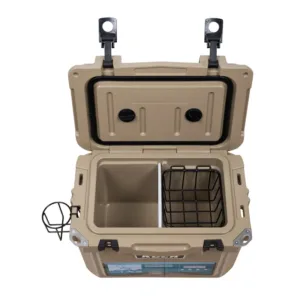
- Never use a completely airtight container. Be sure to leave a small gap, or opt for a cooler equipped with a pressure relief valve.
- Ensure that the cooler’s seal is effective, but do not seal it so tightly that it prevents gases from escaping.
- Store the cooler in a well-ventilated environment. Never place it inside a sealed vehicle or a confined room.
- If you need to ship items using dry ice, be sure to affix a “Dry Ice – UN1845” label to the exterior of the box so that others are aware of the contents.
If excessive carbon dioxide accumulates inside the box, it may cause dizziness or headaches. In rare instances, the cooler could even rupture. Therefore, it is crucial to follow safe handling protocols and never seal dry ice within an enclosed space.
For rotomolded coolers like those from KUER, you can generally expect dry ice to maintain cold temperatures for approximately 18 to 24 hours. Experts agree that the thickness of the insulation layer, the quantity of dry ice used, and the frequency with which the lid is opened are the most critical factors influencing cooling performance. KUER coolers feature ultra-thick foam insulation and robust sealing gaskets, designed to lock in freshness for extended periods and ensure your food remains fresh. Consider trying the following tips to further extend cooling times:
- Pre-chill the cooler the night before your trip.
- Place the dry ice at the bottom of the cooler.
- Stack heavier items on top.
- Store food items in waterproof containers.
Consult this quick reference guide before planning your next adventure. Careful planning will help you stay cool and safe throughout your journey!
FAQ
How do you pack dry ice in a rotomolded cooler box?
Place the dry ice at the bottom of the cooler. Lay a layer of cardboard or newspaper over the dry ice to serve as a barrier. Then, place your food and beverages on top of this barrier. Fill any remaining empty spaces inside the cooler with additional ice cubes or towels. Finally, ensure that the lid is securely fastened.
Can you put dry ice directly on food?
No, you should not allow dry ice to come into direct contact with food. Please wrap the dry ice first, or use materials such as cardboard to create a barrier between the dry ice and the food. Doing so ensures food safety and prevents “freezer burn” (spoilage caused by extremely low temperatures).
Is it safe to travel with dry ice in a rotomolded cooler box?
Yes, traveling with dry ice is safe, provided it is handled correctly. Ensure that your cooler is not completely airtight (i.e., it should have small gaps for ventilation) so that the gas produced as the dry ice sublimates can escape. Place the cooler in a well-ventilated area. Never leave it inside a sealed vehicle for an extended period.
What should you do with leftover dry ice?
Place any leftover dry ice in a safe outdoor location and allow it to sublimate (melt) naturally. Never throw it directly into a trash can, sink, or toilet, as this could create hazards or damage plumbing fixtures; the gas produced by the dry ice must be allowed to dissipate safely into the air.
Can you use regular ice with dry ice in a rotomolded cooler box?
Yes, you can mix the two. Dry ice significantly enhances the cooling effect inside the cooler; furthermore, when used in conjunction with dry ice, regular ice cubes melt more slowly, thereby extending the overall cooling duration. This ensures that your food and beverages remain at a low temperature for a longer period.

 Request a quote
