

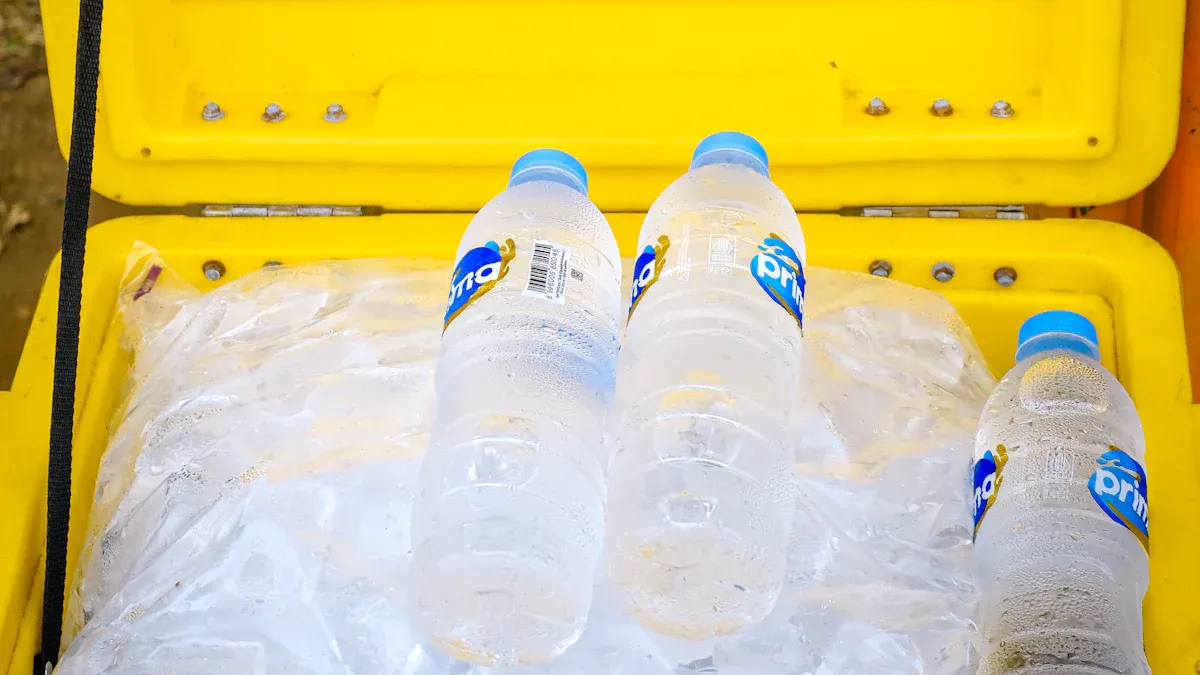
On average, dry ice stays solid for 18 to 24 hours in a plastic cooler. The real time depends on how good the insulation is and what kind of cooler you use. Good insulation, like in a hard shell insulated lunch box, helps dry ice last longer. KUER plastic coolers are called the best cooler for ice retention. They keep dry ice solid for more time because of their special design. Many people who like outdoor trips pick these coolers when they want to know how long dry ice will last.
Key Takeaways
Dry ice lasts 18 to 24 hours in a basic cooler. Better insulation can extend this to 24 to 36 hours.
Using more dry ice helps it last longer. For example, 20 pounds can keep it solid for up to 48 to 72 hours.
Pre-chill your cooler with regular ice to help dry ice last longer. This can extend its life significantly.
Keep the cooler closed as much as possible. Opening it lets warm air in and speeds up melting.
Always handle dry ice with care. Use gloves and ensure good ventilation to avoid carbon dioxide buildup.
How Long Does Dry Ice Last
Typical Duration in a Plastic Cooler
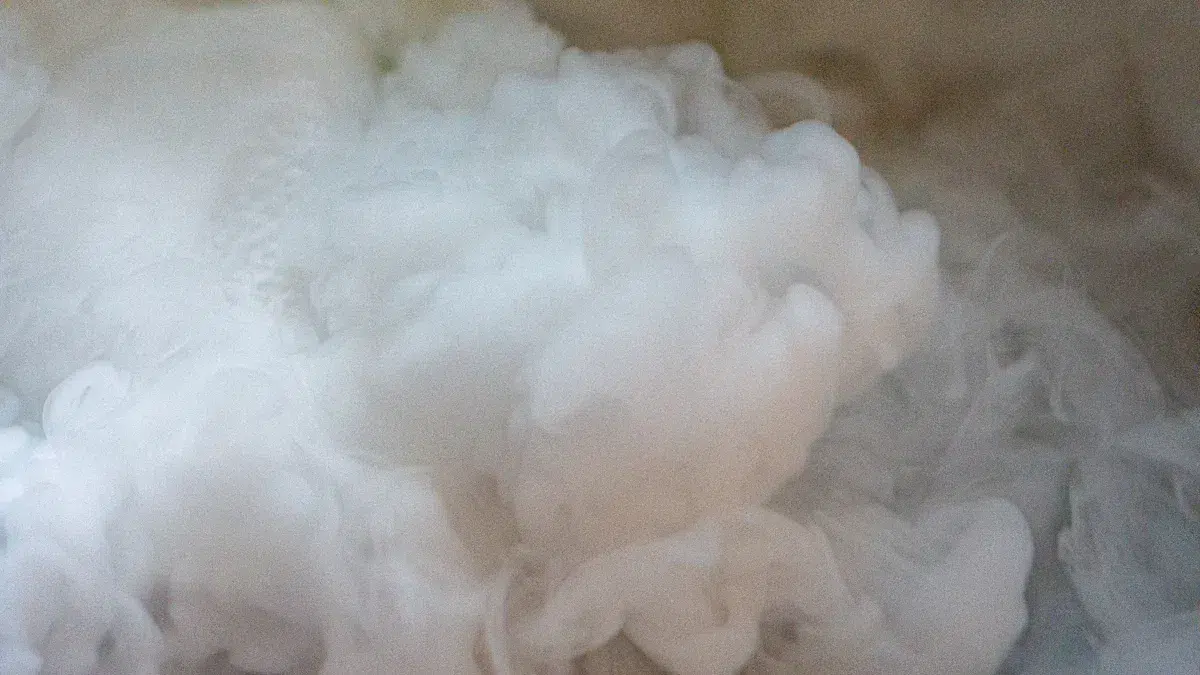
A lot of people want to know, “how long does dry ice last?” The answer changes based on the plastic cooler and how much dry ice you use. Most of the time, dry ice stays solid for 18 to 24 hours in a simple plastic cooler. If you have a cooler with better insulation, dry ice can last about 24 to 36 hours. Some coolers, like the KUER plastic cooler box, can make dry ice last even longer. These coolers use thick foam and strong plastic to slow down how fast dry ice turns into gas. If you put 20 or more pounds of dry ice in a really good cooler, it can last up to 48 to 72 hours.
The table below shows how long dry ice lasts in different coolers:
Cooler Type | Dry Ice Amount | Approx. Duration |
|---|---|---|
Basic Cooler | 5 lbs | 18-24 hours |
Standard Cooler | 10 lbs | 24-36 hours |
Premium Cooler | 20+ lbs | 48-72 hours |
Some people also ask how long dry ice lasts in a styrofoam cooler. Big styrofoam coolers can keep dry ice for 3 to 4 days. This is because they hold more ice and have better insulation. In a normal plastic cooler, dry ice usually lasts about 24 hours. When you ship something, dry ice lasts between 18 and 36 hours. This depends on the box and the outside temperature. At room temperature, dry ice only lasts a few hours before it turns into gas.
Factors That Affect Duration
Many things change how long dry ice lasts in a plastic cooler. The amount of dry ice is important. More dry ice means it stays cold longer. The cooler’s quality also matters. A really good cooler, like the KUER plastic cooler box, keeps cold air inside and slows down melting.
Other things that matter are:
Cooler grade: Fancy coolers keep dry ice solid for more time.
Lid opening: Every time you open the lid, warm air gets in and melts the ice faster.
Packing order: Where you put the dry ice changes how cold spreads inside.
Outside heat: Hot weather makes dry ice melt faster.
Total weight: Using more dry ice helps it last longer.
The place you keep the cooler also affects how long dry ice lasts. The table below shows how different things can change how long dry ice stays solid:
Factor | Effect on Dry Ice Longevity |
|---|---|
Temperature | Cooler places make dry ice last longer |
Air circulation | Still air is better than moving air |
Humidity | Less humidity is better |
Sunlight | Keep out of direct sunlight |
If you use 6 to 8 pounds of dry ice in a plastic cooler, it can keep things cold for about 36 to 48 hours. For the best results, pick a cooler with thick walls and a tight lid. The KUER plastic cooler box is special because it has strong insulation, blocks UV rays, and is very tough. These things help dry ice stay solid for the longest time.
Tip: If you want dry ice to last longer, use more dry ice and keep the cooler closed as much as you can. Put the cooler in the shade to slow down melting.
Plastic Cooler Performance
Insulation and Material Quality
Insulation is very important for how long dry ice lasts. Good insulation slows down how fast dry ice turns into gas. KUER plastic coolers have thick foam between two plastic walls. This keeps cold air inside and stops heat from coming in. Rotomolded coolers have thick, even walls all around. This makes the cooler strong and helps it keep ice for 5 to 7 days.
The table below shows how insulation changes how long dry ice lasts:
Insulation Quality | Effect on Dry Ice | Recommendation |
|---|---|---|
Higher temperature | Faster sublimation | Use more dry ice in warmer climates |
Better insulation | Less dry ice needed | Invest in high-quality coolers |
Rotomolded coolers, like the KUER plastic cooler box, do not have weak spots. This means air cannot escape easily. The thick foam keeps the inside cold for a long time. Injection-molded coolers may need more insulation to work as well. Rotomolded coolers are also stronger and can handle rough use.
Note: Rotomolded coolers are now the top choice for people who want strong coolers that keep ice for a long time.
Durability and UV Resistance
Durability is important when you use a cooler outside. KUER coolers use rotomolded plastic, so they are tough and can take drops or bumps. The thick walls stop cracks and breaks. This is good for camping, fishing, or other outdoor fun.
UV resistance is also important. Sunlight can hurt plastic and make it fade or get weak. KUER coolers use UV-resistant materials to stop sun damage. This keeps the cooler strong and looking nice, even after many hours in the sun.
UV resistance helps the cooler last longer outside.
Impact durability keeps the cooler safe from drops and rough use.
A cooler with strong insulation and UV resistance works well anywhere. KUER plastic coolers have both, so you get the best cooler for every adventure.
Maximizing Dry Ice Longevity
Pre-Chill the Cooler
Pre-chilling a plastic cooler helps dry ice last longer. Cooling the cooler before adding dry ice prevents the ice from working hard to chill the walls. People can use regular ice or frozen packs to cool the inside for several hours. Some users report that pre-chilling lets dry ice stay solid for up to five days in a large, high-quality cooler. Here are some ways to pre-chill:
Place ice or frozen water bottles inside the cooler for a few hours.
Use ice that is colder than freezing for better results.
Remove the ice or bottles before adding dry ice.
Minimize Air Gaps
Air gaps inside a plastic cooler make dry ice melt faster. Filling empty spaces helps keep the temperature low. People can use drinks, cold packs, or even extra ice to fill these gaps. Packing the cooler as full as possible keeps the cold air trapped. Some tips include:
Fill spaces with beverages or cold packs.
Add regular ice to cover awkward spots.
Keep a two-thirds ice to one-third food ratio for best cooling.
Use a separate cooler for drinks to avoid opening the main cooler often.
Keep Cooler Closed
Opening the cooler lid lets warm air in and cold air out. This makes dry ice disappear faster. Keeping the cooler closed as much as possible helps dry ice last longer. People should plan what they need before opening the lid. Other helpful tips:
Use larger blocks of dry ice instead of small pieces.
Pack dry ice on top for quick cooling or at the bottom for longer storage.
Fill air pockets with ice or crumpled newspaper.
Make sure there is a way for gas to escape safely.
Store in Shade
Sunlight heats up a cooler and melts dry ice quickly. Storing the cooler in the shade keeps it cold for a longer time. Covering the cooler with a blanket or tarp adds extra protection. The table below shows how the placement of dry ice affects cooling:
Placement of Dry Ice | Advantages | Disadvantages |
|---|---|---|
On Top | Rapid cooling; good for short trips | Bottom items may not stay cold for long periods |
At Bottom | Keeps everything cold for longer | Top items may warm up faster |
Knowing how to store dry ice in a plastic cooler helps people keep food and drinks cold for their whole trip. KUER coolers offer the best results because of their strong insulation and tough design.
Estimating Dry Ice Needs
Guidelines by Cooler Size
Choosing the right amount of dry ice depends on the size of the cooler and how long the user wants to keep items cold. A small cooler needs less dry ice, while a large cooler needs more. For example, a 20-quart cooler usually needs about 5 pounds of dry ice. A 45-quart cooler works best with 12 pounds, and a 65-quart cooler often requires 18 pounds. These amounts help keep food and drinks cold for a full day.
Cooler Size | Dry Ice Needed |
|---|---|
20 qt | 5 lb |
45 qt | 12 lb |
65 qt | 18 lb |
Larger storage spaces, like residential refrigerators, may need 20 pounds of dry ice for 24 hours. Commercial freezers and refrigerators often use 50-pound blocks, with the number of blocks based on the size of the unit. For example, a 4-foot by 8-foot freezer may need four 50-pound blocks each day.
Tip: Always pack the cooler as full as possible. Less empty space means better cold retention and less dry ice needed.
Timeframe Chart
The amount of dry ice also depends on how long the user wants to keep things cold. The chart below shows how much dry ice is needed for different cooler sizes and timeframes. This helps users plan for short trips or longer adventures.
Cooler Size (qts) | 12 Hours | 1 Day | 2 Days | 3 Days | 4 Days | 5 Days | 7+ Days |
|---|---|---|---|---|---|---|---|
5-10 | 1-5 lbs | 5-10 lbs | 10 lbs | N/A | N/A | N/A | N/A |
20 | 1-5 lbs | 5-10 lbs | 10-15 lbs | 20-30 lbs | 30-40 lbs | N/A | N/A |
40 | 5 lbs | 5-10 lbs | 10-15 lbs | 25-30 lbs | 30-40 lbs | 50 lbs | N/A |
65 | 5 lbs | 5-10 lbs | 10-15 lbs | 25-30 lbs | 30-40 lbs | 50 lbs | 70-100 lbs |
100 | 5-10 lbs | 10-15 lbs | 15-20 lbs | 30-50 lbs | 50-70 lbs | 70-100 lbs | 100-200 lbs |
A 20-quart cooler with 5 to 10 pounds of dry ice can keep items cold for a day. For longer trips, users should add more dry ice. A 65-quart cooler may need up to 100 pounds for a week-long adventure. Planning ahead helps prevent running out of dry ice during a trip.
Note: Cooler quality, outside temperature, and how often the lid opens can change how long dry ice lasts. High-quality coolers like KUER models help dry ice last longer.
Safety Tips for Dry Ice
Handling and Ventilation
Dry ice keeps food cold, but you must handle it carefully. Always wear insulated gloves when you touch dry ice. If dry ice touches your skin, it can cause frostbite. Only adults should handle dry ice to keep everyone safe.
Store dry ice in an insulated container. Do not use airtight or glass containers. Dry ice turns into carbon dioxide gas and needs space to escape. Good ventilation stops gas from building up. Never use dry ice in small, closed rooms. Carbon dioxide is heavier than air and can fill low spaces. This can make breathing hard.
Here is a table with important safety guidelines:
Category | Guidelines |
|---|---|
Handling Instructions | Wear protective gloves. Avoid direct skin contact. Only adults should handle dry ice. |
Storage Instructions | Use insulated, non-airtight containers. Never use glass. Ensure good ventilation. |
Ventilation Requirements | Keep areas well-ventilated. CO₂ is heavier than air. Limit time in enclosed spaces. |
Transportation Instructions | Use insulated containers. Make sure vehicles have fresh air. |
Tip: Always check for fresh air before you enter a space with dry ice.
If air does not move well, carbon dioxide can build up. This may cause dizziness or trouble breathing. Sometimes, people can even pass out. Use CO₂ alarms where dry ice is present. Check the air often to keep everyone safe.
Safe Disposal
Dispose of dry ice with care. The safest way is to let it turn into gas in a place with lots of air. Put leftover dry ice on a hard plastic surface. Keep it away from children and pets. Never put dry ice in sinks, toilets, or sealed containers. This can break pipes or cause pressure to build up.
Here are steps for safe disposal:
Put dry ice in an open, outdoor area so it can turn into gas.
To make it melt faster, pour warm water over dry ice while wearing gloves.
Never flush dry ice down the drain or toilet.
Do not touch dry ice with bare skin.
Keep dry ice away from public places to stop accidents.
Note: Letting dry ice turn into gas outside helps spread carbon dioxide safely into the air.
By following these safety tips, people can use dry ice and stay safe.
Dry ice can last from one to three days in a plastic cooler. The cooler’s quality and insulation are very important. KUER coolers are made with rotomolded plastic and thick foam. This helps them keep ice for up to a week. If you handle dry ice the right way, it will last longer.
If the cooler is sealed well, less than 10% of dry ice is lost each day.
Put food under the ice and fill empty spots to slow down melting.
Factor | Impact on Longevity |
|---|---|
Insulation Quality | Makes dry ice last longer |
Container Type | Special coolers help dry ice last |
Always use safety tips and make a plan before you start.

 Request a quote
