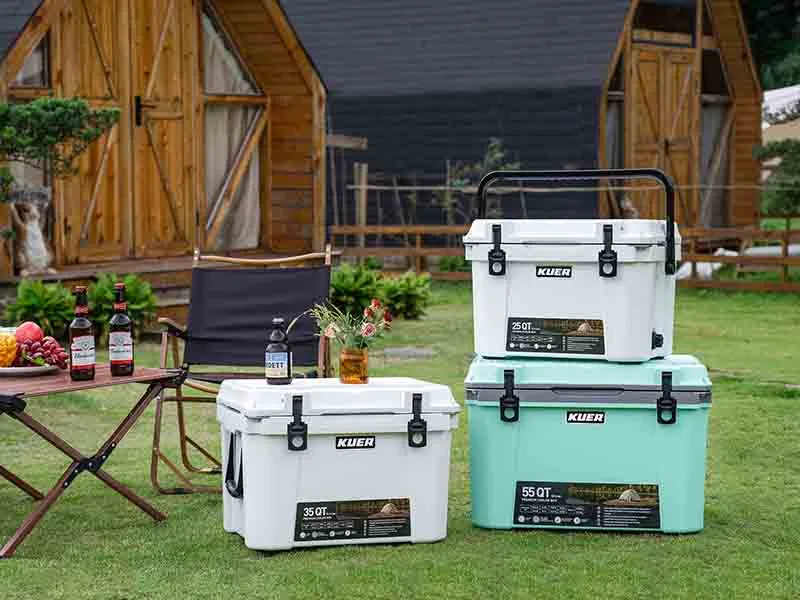


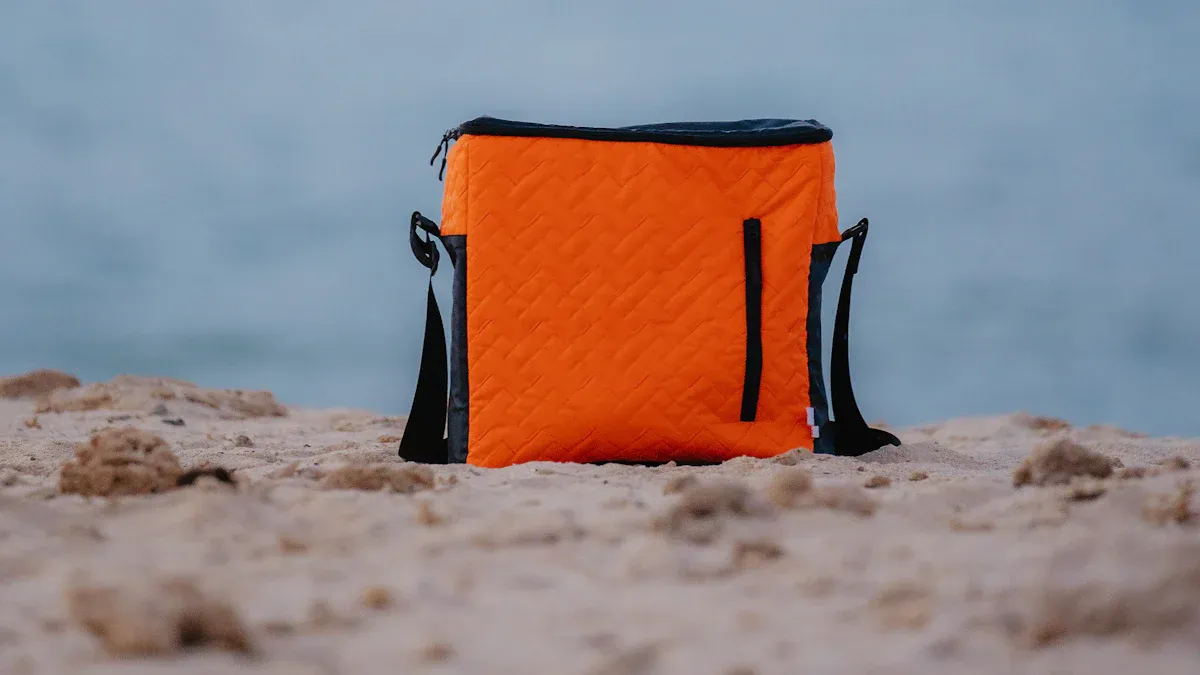
When traveling, you may bring a cooler bag through TSA security checkpoints, provided you comply with their regulations regarding the items contained within. If you are looking for a convenient and practical option, this waterproof, insulated soft cooler bag effectively keeps food and beverages cold. Before packing your luggage, be sure to consult the relevant regulations set forth by the TSA and your airline.
Key Takeaways
- Cooler bags are allowed through TSA, but all liquids inside must follow the 3-1-1 rule.
- Ice packs must be completely frozen at screening—partially melted packs may be treated as liquids and removed.
- Soft-sided insulated cooler bags are the best choice for air travel due to flexibility and easy storage.
- Always check your airline’s carry-on size limits before bringing a cooler bag onboard.
- Organize contents clearly to speed up TSA inspection and avoid delays.
TSA rules for cooler bags
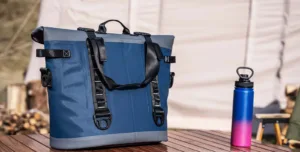
Permitted types
You are permitted to bring an insulated bag through TSA (Transportation Security Administration) security checkpoints. The TSA treats such bags as standard luggage. You have the option to carry it onto the aircraft as carry-on luggage or to check it as checked baggage. If your insulated bag contains no items (i.e., it is empty), passing through security will be entirely hassle-free. If you intend to carry food or beverages inside the insulated bag, you must adhere to the general regulations applicable to all carry-on luggage. Any liquids or gels contained within the insulated bag must comply with the TSA’s “3-1-1” rule. Specifically, this means that individual containers may not exceed 3.4 ounces in volume, and all such containers must fit entirely inside a single, clear, quart-sized, resealable bag.
If the insulated bag is empty, the TSA permits you to carry it onto the aircraft as carry-on luggage. However, if the insulated bag contains liquids, those liquids must strictly adhere to the TSA’s standard “3-1-1” rule regarding liquids in carry-on baggage. This distinction serves to emphasize that while the insulated bag itself is permitted, the items contained within it remain subject to the general restrictions governing liquids in carry-on luggage.
Size and material restrictions
The TSA (Transportation Security Administration) has not established specific size or material regulations for insulated bags. You simply need to ensure that your insulated bag complies with your airline’s carry-on baggage size restrictions. Most airlines permit passengers to carry items that fit into the overhead bins or under the seat in front of them. Soft-sided insulated bags—such as “waterproof, thermal soft coolers”—are an ideal choice, as their flexible construction makes them easy to stow. Furthermore, their waterproof material effectively prevents any liquids inside the bag from leaking out. Before packing, be sure to consult the official website of your specific airline to obtain the most up-to-date size regulations.
Security screening process
Upon reaching the security checkpoint, please place your insulated bag on the conveyor belt for X-ray screening. TSA (Transportation Security Administration) officers will inspect the contents of the bag. If you are using ice packs or gel packs, please ensure they are completely frozen solid when passing through security.
If your ice packs are in a semi-melted, slush-like state or have melted completely, the TSA will treat them as liquids. If they do not comply with the “3-1-1” rule, you may be required to discard them. To avoid unnecessary inconvenience, please ensure your ice packs are thoroughly frozen solid before traveling. You may also consider using a soft-sided insulated bag to help ensure your items remain at a low temperature until you reach your destination.
Cooler bag contents
Ice packs and gel packs
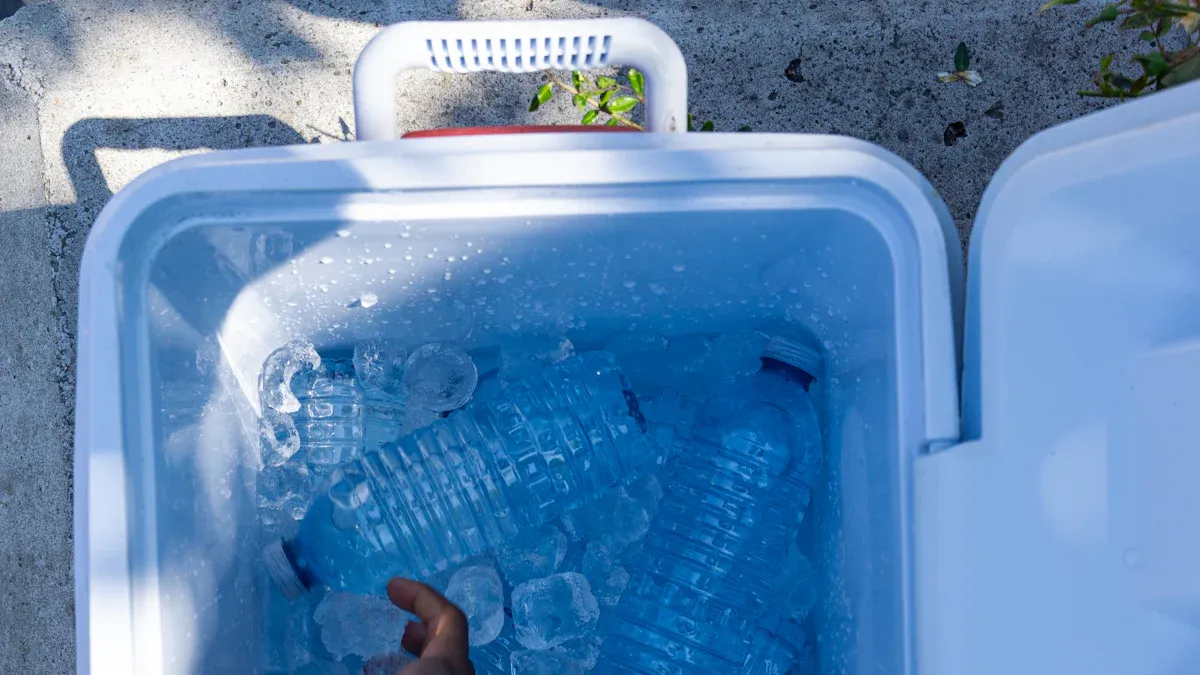
When traveling, you naturally want to keep the food and drinks you carry with you nice and cold. This is where ice packs and gel packs come in handy. According to Transportation Security Administration (TSA) regulations, you are permitted to bring frozen liquid items onto a plane, provided they remain in a completely frozen, solid state when passing through security. If your ice packs are in a semi-melted, slushy, or partially thawed state, the TSA will treat them as liquids. This means that each ice pack must have a capacity of 3.4 ounces (approximately 100 ml) or less and must fit inside your 1-quart (approximately 1-liter) clear, resealable bag. However, if you require gel packs for medical purposes—or to keep baby food and breast milk chilled—you are permitted to carry them with you even if they are not in a frozen state. In such cases, simply inform the TSA officers at the security checkpoint.
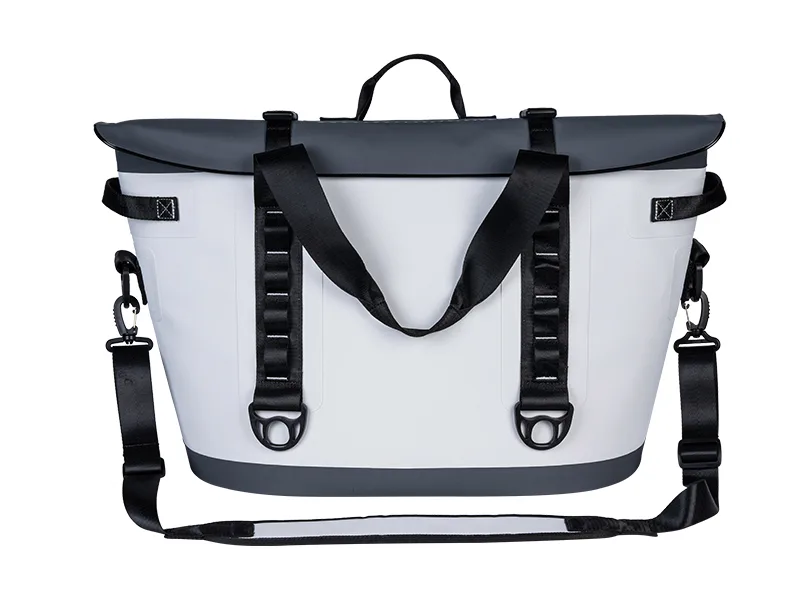
This waterproof, insulated soft cooler bag excels at keeping ice packs and snacks at low temperatures. You can place your pre-frozen gel packs inside the bag; its superior insulation properties will ensure that the contents remain perfectly chilled until you reach your destination.
Food and beverage guidelines
You can carry various types of food items in an insulated bag. The following are some common items you may carry:
- Solid foods, such as sandwiches or fruit
- Frozen ice packs
- Breast milk or baby food
- Medications requiring refrigeration
- Snacks
- Beverages that comply with liquid carriage regulations
Please refer to the table below to see what items you are permitted to carry, along with any relevant special instructions:
| Item | Allowed in Carry-On | Special Instructions |
|---|---|---|
| Bottled Water | Yes (≤ 3.4oz/100 ml) | It must be capable of being loaded into a liquid bag. |
| Bread | Yes | Eating solid food is no problem. |
| Breast Milk | Yes | Please inform TSA security personnel that items exceeding 3.4 ounces are permitted. |
| Alcoholic Beverages | Yes (≤ 3.4oz/100 ml) | Please consult the airline; alcohol consumption is prohibited on board. |
| Baby Food | Yes | Please bring a reasonable amount; it will be inspected separately. |
| Canned Foods | Yes | Additional security screening may be required; checking your luggage is a safer option. |
Prohibited items
Some items are not permitted in insulated bags. Here is a brief overview:
| Item | Prohibited | Exceptions |
|---|---|---|
| Liquids over 100ml | Yes | Baby food, medicine, breast milk (declare) |
| Partially melted ice packs | Yes | Must meet 3-1-1 liquids requirements |
| Frozen Liquid Items | Yes | Must be frozen solid at screening |
If you attempt to carry prohibited items, the TSA (Transportation Security Administration) may confiscate them. Furthermore, if you violate regulations, you could lose your TSA PreCheck eligibility or face penalties. Therefore, please be sure to check your insulated bag before heading to the airport.
Packing cooler bags for TSA
Keeping items cold
When traveling, you naturally want to ensure that the snacks and beverages you bring along remain refreshingly cold. First, be sure to pre-chill all your food and drinks before packing them; this helps keep the contents cold for a significantly longer duration. Place gel packs or standard ice packs in the freezer until they are completely frozen solid. It is crucial to pack your cooler bag at the very last minute—just before you head out for the airport. Ideally, this step should be completed within ten minutes of leaving home. The proper packing order is as follows: first, lay a layer of ice packs at the bottom of the bag; next, add your food and drinks; and finally, place another layer of ice packs on top. If you are carrying raw meat or seafood, ensure it is securely sealed and placed at the very bottom of the cooler bag. Use towels or soft items to fill any empty spaces within the bag, thereby creating a barrier against warm outside air. During your journey, try to avoid exposing the cooler bag directly to sunlight. Opt for a soft-sided cooler bag that offers excellent insulation and water-resistant properties (such as a “waterproof insulated soft cooler”); this ensures that the contents remain cold for an extended period while effectively preventing any liquid leakage.
Tip: It is recommended to use several small gel packs rather than just one large one. This helps ensure a more uniform temperature distribution throughout the interior of the cooler bag.
Preparing for security checks
With a little advance planning, navigating TSA security checkpoints is actually quite simple. Select an insulated bag of an appropriate size, ensuring it fits either under the seat in front of you or in the overhead luggage bin. Be sure to verify that your ice packs are completely frozen solid; if they are partially melted or in a liquid state, the TSA may classify them as liquid items and confiscate them. When packing, arrange your items neatly so that they are easily visible. Any unfrozen liquids or gel-like substances should be placed inside a single transparent, quart-sized (approximately 1-liter) resealable bag. If you are traveling with medications or baby food, ensure they are clearly labeled and that you have any relevant supporting documentation readily available for inspection. Finally, before departing, be sure to review the specific regulations of your airline to confirm their requirements regarding the transport of insulated bags and ice packs.
What to expect at screening
At the security checkpoint, you will need to place your insulated bag on the conveyor belt for X-ray screening. TSA officers may request that you open your bag to inspect its contents. If your ice packs are completely frozen solid, you may carry them with you; however, if they have begun to melt—unless you have a valid medical justification—you may be required to discard them. Security personnel may examine your food and beverages, though solid food items typically clear security quickly. Please remain calm and cooperate by answering any questions the officers may ask. By using a soft-sided insulated bag, you can not only navigate the security process more smoothly but also ensure that your food remains fresh throughout your journey.
Carry-on vs. checked cooler bags
Pros and cons
When traveling, you have the option to carry your cooler bag as carry-on luggage or check it in as checked baggage. Each method has its own advantages and disadvantages.
- Carrying Your Cooler Bag as Carry-On:
- During the flight, you can conveniently access snacks, beverages, or medications whenever you need them.
- You avoid the need to wait in line at baggage claim, allowing you to exit the airport more quickly.
- This method is ideal for short trips or when you require immediate access to refrigerated items.
- You must adhere to the airline’s size restrictions for carry-on luggage.
- You must comply with the “3-1-1” rule for liquids (i.e., individual containers no larger than 3.4 ounces/100 ml, all containers fitting into a single transparent quart-sized/approx. 1-liter zip-top bag, and one bag allowed per person); this means you cannot carry large bottles of beverages or melted ice packs.
- Checking Your Cooler Bag as Checked Baggage:
- You can pack a greater number of items or carry larger quantities of goods.
- You do not need to worry about restrictions regarding the volume of liquids you carry.
- You will not be able to access the food or beverages inside the bag until you retrieve your luggage.
- You must ensure the cooler bag is packed securely to prevent liquid leaks or food spoilage. Most travelers can avoid such issues simply by using sealable bags and packing carefully.
Tip: Consider your specific itinerary when making your decision. If you need constant access to your items throughout the journey, carrying the bag on board is the best choice; however, for long-distance travel or when carrying a large volume of items, checking the bag may be the more suitable option.
Carry-on guidelines
When carrying an insulated bag as carry-on luggage, you must comply with TSA (Transportation Security Administration) regulations. The following is a concise guide:
| Item | Allowed? | Condition |
|---|---|---|
| Solid food | Yes | No size or quantity limit |
| Liquids over 100ml | No | Excluding baby food, medications, and breast milk (must be declared) |
| Frozen ice packs | Yes | Must be frozen solid at security screening |
| Melted ice packs | Limited | Must follow 100ml rule |
| Dry ice | Yes | Maximum 2.5 kg (5.5 lbs); must be labeled and placed in a breathable container |
| Breast milk/baby food | Yes | A reasonable quantity is permitted, provided it is declared to security personnel |
Before packing your luggage, please be sure to check the airline’s carry-on baggage size regulations.
Checked bag guidelines
If you decide to check in an insulated bag, you will need to follow a few additional steps:
| Requirement | Details |
|---|---|
| Maximum dry ice allowed | 5.5 pounds (2.5 kg) per person |
| Container requirements | CO₂ must be vented, and the package must be labeled “Dry Ice” along with the accurate weight |
| Airline approval | Tell the airline at the counter |
| Checked luggage | Declare your cooler bag at the desk |
Please place your items inside leak-proof bags, ensuring that all openings are securely sealed. Provided they are packed properly, most people will not encounter issues with leaks or spoilage during their travels—even on long-haul flights.
Whichever method you choose, an insulated bag will help keep your food and beverages fresh throughout your journey.
As long as you comply with TSA (Transportation Security Administration) regulations, you may travel with an insulated bag. Please ensure that your ice packs are completely frozen solid and properly packed so that TSA security officers can easily inspect the contents of the bag. Please refer to the table below for a quick guide:
| Item Type | Guidelines |
|---|---|
| Frozen Liquid Items | Must be in a completely frozen state at the security checkpoint. If thawed, please follow the “3-1-1” rule. |
| Ice Packs | If in a frozen state, it is permitted to be carried. If in a semi-melted (slushy) state, it must comply with regulations for carrying liquids. |
| Dry Ice | Small quantities may be stored, provided they are labeled and the area remains ventilated. |
Before packing, please refer to the following checklist:
- Frozen ice packs.
- Select a lightweight insulated bag.
- Place liquids in transparent bags.
- Label the dry ice.
- Familiarize yourself with customs regulations.
- Store the insulated bag properly.
FAQ
Can you bring cooler bags as a personal item on a plane?
Yes, provided that the insulated bag is small enough to fit under the seat in front of you, you may carry it as a personal item. However, before packing, be sure to check the specific size regulations of the airline you are flying with.
Do cooler bags need to be empty at TSA security?
No, you may pack food or beverages inside the insulated bag. Simply ensure that any liquids or gels inside the bag comply with the “3-1-1” security rule. Additionally, any ice packs used to keep items fresh must remain completely frozen and in a solid state.
What happens if my ice packs melt before security?
If your ice packs have melted or turned into a semi-melted slushy consistency, TSA officers will treat them as liquids. If the volume exceeds 3.4 ounces, you may be required to discard them.
Are there foods you cannot pack in cooler bags for flights?
| Food Type | Allowed? | Notes |
|---|---|---|
| Solid foods | Yes | Sandwiches, fruit, snacks |
| Liquid foods | Limited | Under 3.4 oz per container |
| Alcoholic drinks | Limited | Under 3.4 oz, unopened |
 Request a quote
